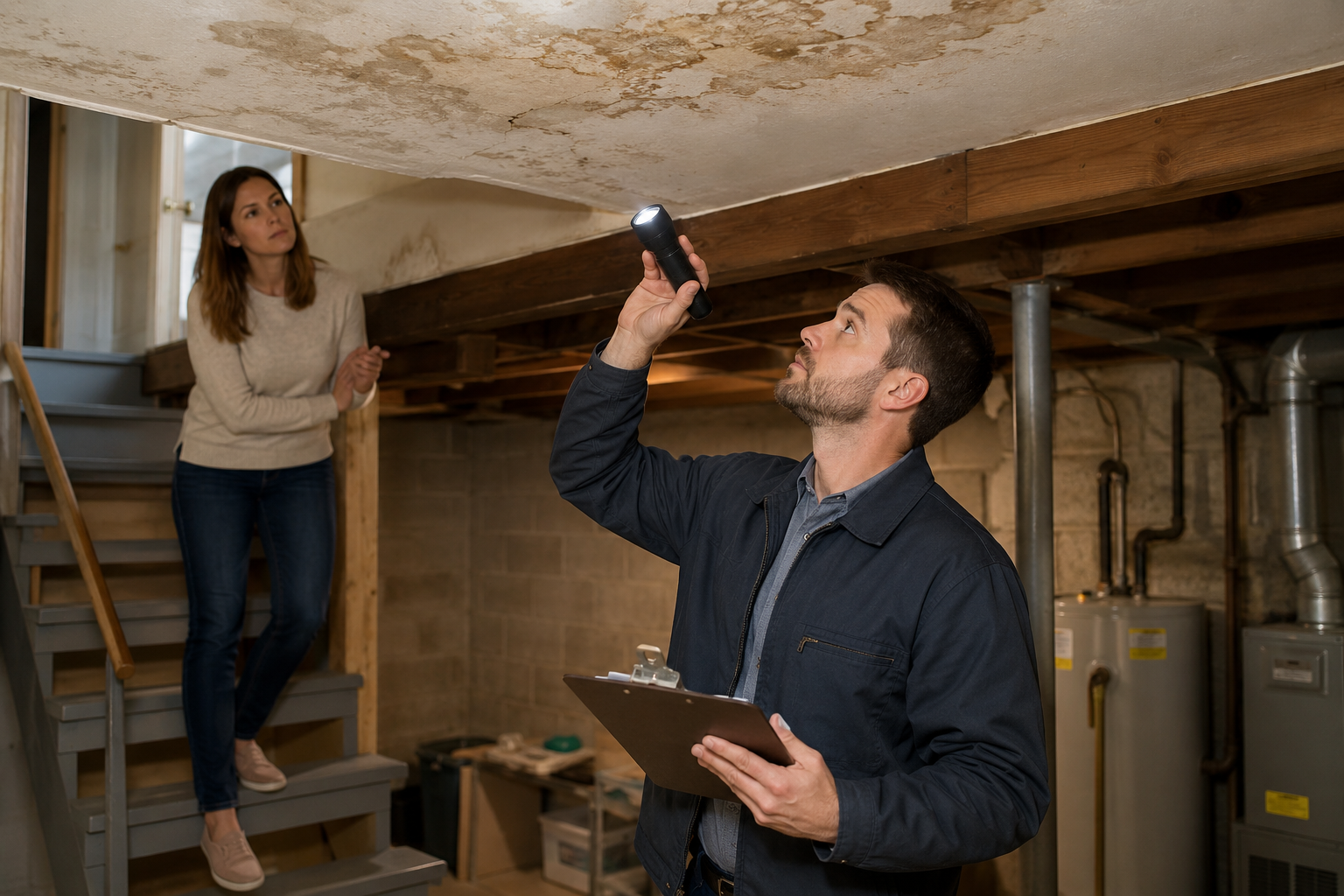
You need to sell, and the house needs work — a tired roof, a dated kitchen, maybe problems you’d rather not think about. Every dollar you spend fixing it is a gamble that a future buyer will pay it back, and every repair you skip invites lowball offers. This guide gives you a clear framework for selling a house that needs repairs: which fixes actually return money, which never do, and when selling as-is beats renovating entirely.

When selling a house that needs repairs, you have three options: make strategic repairs and sell at full market value, price the home below market to reflect its condition, or sell as-is to buyers who accept the property in its current state. The right choice depends on three things — the cost of repairs versus the value they add, how fast you need to sell, and how much cash you can spend upfront. Cheap cosmetic fixes almost always pay; major renovations before selling almost never do.
Key takeaways
- Small, cheap, visible fixes — paint, caulk, hardware, deep cleaning — return several times their cost; major renovations before a sale typically return only 50–70 cents per dollar.
- Buyers mentally double repair costs: a $6,000 roof issue becomes a $12,000 price objection, which is why addressing scary-sounding defects often pays even when cosmetics don’t.
- “As-is” changes what you’ll fix, not what you must disclose — known defects still have to be revealed in writing almost everywhere.
- A pre-listing inspection turns unknown problems into a priced list, letting you choose repairs strategically instead of reacting to a buyer’s inspector.
- Homes needing major work attract a different buyer pool — investors, flippers, and cash buyers — who price from the after-repair value, not from comparable finished homes.
- Financing rules matter: serious safety or structural defects can make a home unfinanceable with government-backed loans, shrinking your buyer pool to cash and conventional buyers.
Selling a house that needs repairs: the three paths, compared

Every seller with a fixer faces the same fork, so name the three paths clearly before choosing one. Path one: repair and sell at market. You invest time and cash to bring the home to the condition of competing listings, then price it against them. This maximizes sale price but demands upfront money, weeks or months of work, and tolerance for renovation surprises. Path two: price for condition. You fix little or nothing, but price honestly below comparable finished homes — essentially handing the buyer the repair budget through the price. It’s faster and cash-free, but the discount buyers demand usually exceeds the actual repair cost. Path three: sell as-is. You market the home explicitly in its current condition, attracting cash buyers and investors who expect problems and won’t ask you to fix anything.
Nobody is born knowing what escrow means. The people who seem confident just got a calmer explanation than you did.
That's the whole idea behind our field guide — 73 pages that explain buying, selling, renting, and investing the way a patient friend would. This article is one piece of the picture. The book is the picture.
The decision hinges on a piece of math most sellers never do: for each significant defect, compare the repair cost against the price impact of leaving it. These rarely match. A $400 fix for a dripping bathroom faucet prevents a “deferred maintenance” impression that colors the buyer’s view of the entire house. A $60,000 kitchen renovation might raise the price $40,000 — a guaranteed loss. The pattern that emerges from that math is nearly universal: fix the cheap and the scary, skip the expensive and the cosmetic. The rest of this guide turns that pattern into a checklist.
Repairs worth making before selling — the money-back list
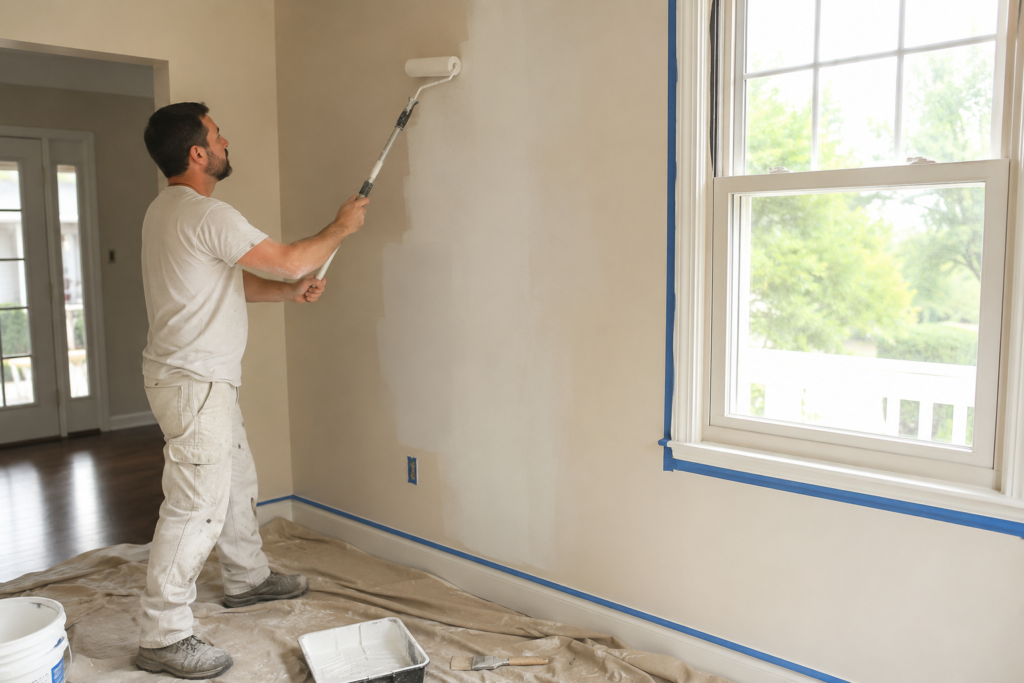
The repairs that pay share three traits: they’re inexpensive, they’re visible in the first five minutes, or they neutralize fear. Start with the fear-neutralizers, because buyers price fear at double. Active leaks, exposed wiring, a furnace that won’t fire, missing handrails, standing water in the crawlspace — these items make buyers imagine the worst about everything they can’t see. Fixing them rarely adds “value” in an appraisal sense; it removes a discount that would have been far larger than the repair bill.
Then the cheap visibles, which are the highest-ROI dollars in all of real estate: fresh neutral paint in the main rooms, new caulk in kitchens and baths, updated cabinet hardware and light fixtures, patched drywall dings, clean or replaced HVAC filters and outlet covers, and a genuinely deep-cleaned interior. Outside: mulch, trimmed shrubs, a washed or repainted front door, and clean windows. None of these costs serious money; together they move a listing from “needs work” to “well kept,” which changes the entire negotiating frame. Presentation multiplies these fixes further — our guide on how to stage your home for a quick sale covers the layer that goes on top of the repairs.
Repairs to skip: where sellers burn money they never see again
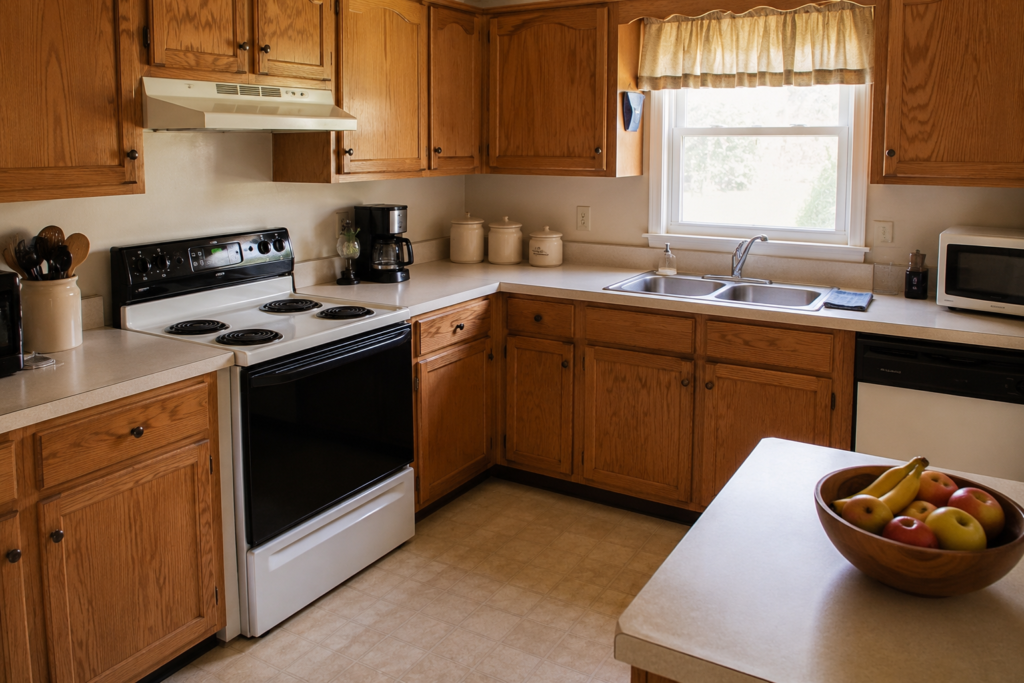
The repairs to skip are the ones that feel most productive: full renovations. Industry cost-versus-value research has shown the same result for decades — major kitchen and bath remodels, additions, and whole-house window packages recoup only a fraction of their cost at resale, commonly 50–70%. The reason is taste: your $55,000 kitchen reflects your choices, and the buyer walking through was going to rip out someone’s choices anyway. You’re not selling them a kitchen; you’re selling them the right to build theirs. Pre-sale renovations also cost you months of carrying costs — mortgage, taxes, insurance, utilities — that never appear in the renovation math but absolutely appear in your bank account.
The smarter instrument for big-ticket items is the credit or the price adjustment: let the buyer’s own contractor quote the roof, then negotiate the number, rather than pre-spending on their behalf. There’s one consistent exception — repairs that block financing. Government-backed loans require homes to meet minimum property standards; peeling paint in older homes, missing handrails, broken windows, exposed subfloor, and inoperable heating can each cause an appraiser to require repairs before the loan closes, and details of those standards are published by the U.S. Department of Housing and Urban Development. If your likely buyer uses one of these loans — common in entry-level price ranges — fixing the standards list isn’t optional spending; it’s what keeps three-quarters of your buyer pool in the room.

Stop googling one term at a time. Understand the whole thing.
Articles answer one question. Real Estate, Made Readable answers the next fifty — 73 pages that walk you from total beginner to confident decision-maker, in plain English.
- Buying, selling, renting & investing — all in one place
- Every term explained the first time it appears
- Diagrams, worked examples & decision cheat-sheets
Instant PDF download
Selling as-is: what it actually means — and what it never means

“As-is” is the most misunderstood phrase in residential real estate, so here is its exact meaning: the seller will not make repairs or provide credits for the property’s condition — the buyer takes it as it stands. That’s all. It does not mean the buyer can’t inspect (they usually still can, and still can walk away if their contingency allows). It does not speed up the legal process. And critically, it does not reduce your disclosure obligations by one word: in most jurisdictions you must still reveal every material defect you know about, in writing, exactly as any other seller would. An as-is sale with concealed known defects is a lawsuit with a head start — our guide on how property disclosure statements work explains what must be revealed and why hiding problems backfires legally.
Used honestly, as-is is a filter, not a trick. It tells the market: price accordingly, don’t request repairs, bring offers that reflect condition. That filter repels finicky retail buyers and attracts the audience you actually want for a rough property — investors, flippers, and buyers specifically hunting projects. The listing language matters: “sold as-is, priced to reflect condition, pre-listing inspection available” reads as transparent and serious. “As-is, seller motivated, bring all offers” reads as desperate and invites 40%-off fishing expeditions. Same house, different negotiations.
How to price a house that needs work

Pricing a fixer is a subtraction problem, and getting the starting number right matters more than anything you fix. Begin where every serious pricing exercise begins: what the home would be worth in sellable condition, established through recent comparable sales — the process we walk through in how to find out what your house is really worth and, at the next level of rigor, in how to read a comparative market analysis. From that finished-condition value, subtract the documented repair costs (your pre-listing inspection plus contractor quotes turn guesses into numbers), and then subtract an inconvenience margin — buyers demand compensation for the hassle and risk of managing repairs, typically another 5–15% of the repair total depending on how scary the work is.
Know also how the professional buyers will price against you, because for rough houses they set the floor. Investors work backward from ARV — after-repair value — using formulas like 70–80% of ARV minus repair costs. A home worth $300,000 fixed, needing $40,000 of work, prices in an investor’s spreadsheet at roughly $185,000–$200,000. If your bottom line is meaningfully above that, your buyer is a homeowner-occupant who’ll accept a project for a fair discount — which shapes where and how you market. And resist the classic fixer temptation of pricing high “to leave room to negotiate”: overpriced rough houses sit, and sitting is lethal, because every week on market reads as confirmation that something is badly wrong. Priced right, even rough homes move — the mechanics are in our guide on how to sell your house fast.
Who buys houses that need repairs — and how to avoid the lowball trap
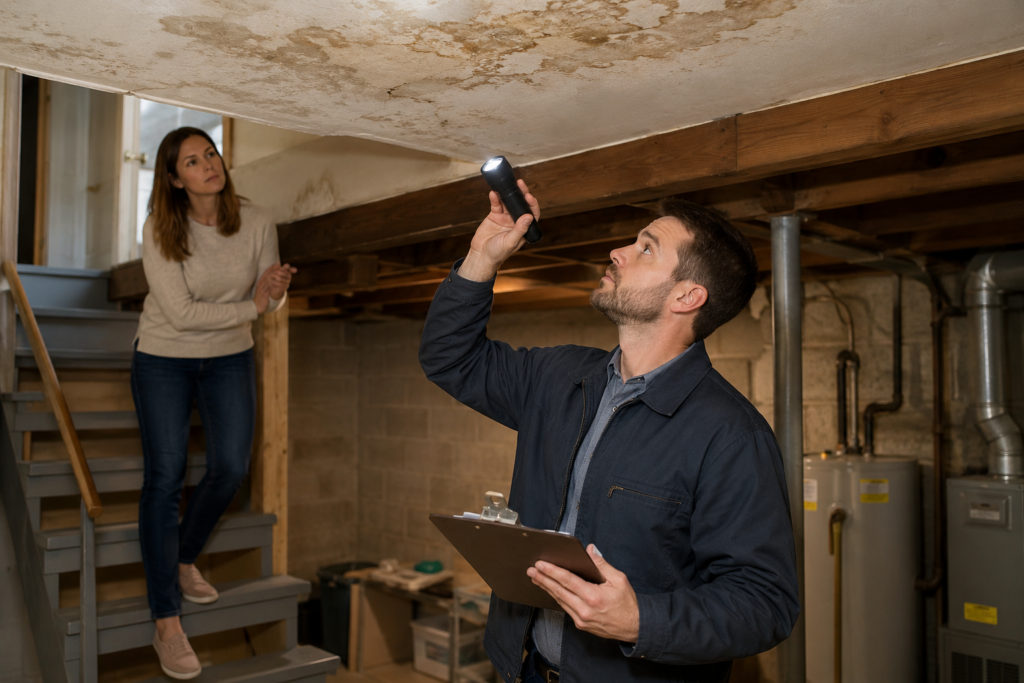
Four buyer types show up for fixers, each with different money and motives. Owner-occupants hunting a deal pay the most — they’re buying a future home, not a margin — but they need financing, patience, and a property that isn’t too far gone. Local investors and flippers pay less but close fast, in cash, with no repair requests; they’re the right answer when speed and certainty outrank price. Instant-offer companies (the “we buy houses” and iBuyer world) offer maximum convenience at the steepest discount, with service fees layered on top. Wholesalers — who contract your house intending to resell the contract to an investor — offer the least and add a middleman’s margin; treat unsolicited “cash offer today” calls with corresponding skepticism.
The book they should hand you with the keys
Everything in real estate finally explained like a friend would — 73 pages, 3 levels, from your first viewing to your first investment property. Read it once, keep it forever.
Instant download
The defense against lowballing is competition and information. Get multiple offers whenever possible — even two competing cash buyers changes the price meaningfully — and never accept a “take it today or lose it” deadline, which exists purely to prevent comparison. Have your own numbers (finished value, repair quotes) before the first buyer walks through, so their “our contractor says it needs $80,000” meets your documented $40,000. An agent who regularly sells project properties earns their fee several times over here, both in pricing and in knowing which local investors actually close; choosing one is its own skill, covered in how to find a realtor you can trust. Industry data on how homes sell and who represents sellers is maintained by the National Association of Realtors if you want the research behind that recommendation.
Common mistakes when selling a house that needs repairs
1. Renovating to your own taste right before leaving
Sellers finally fix the house the way they always wanted it — for someone else to enjoy — and recoup a fraction of the spend. The discipline: every pre-sale dollar must target the buyer’s first impression or fear, not your unfinished wishlist. If a repair wouldn’t change what a stranger offers within five minutes of walking in, or what their inspector writes, it doesn’t make the list.
2. Skipping the pre-listing inspection to avoid “creating” disclosures
Some sellers deliberately avoid inspecting so they can honestly say they didn’t know. It’s a false economy: the buyer’s inspector finds everything anyway — at the worst possible negotiating moment — and strategic ignorance reads terribly if a dispute ever surfaces. Knowing first means pricing first, fixing selectively, and negotiating from your numbers instead of reacting to theirs.
3. Marketing a project house with glamour-listing language
Describing a fixer as “charming and full of potential” with carefully cropped photos attracts the wrong buyers, who fall out of escrow the moment their inspector reports back — and every fallen escrow stigmatizes the listing. Honest positioning (“priced to reflect needed updates; inspection report available”) attracts buyers who close, which is the only kind worth attracting.
4. Comparing offers on price alone
A financed offer $15,000 higher than a cash offer can be worth less: appraisal risk on a rough house, repair-standard requirements from the lender, and weeks of extra carrying costs all eat the difference. Score every offer on net proceeds × probability of closing × time. For genuinely rough properties, certainty is routinely worth five figures.
5. Letting one dramatic repair quote set the negotiation
Buyers arrive with their contractor’s worst-case number and negotiate from it. Sellers without their own quotes absorb the full theatrical figure. Two independent quotes on every major system — obtained before listing — cost you a few phone calls and routinely save thousands, because disputes about price collapse quickly when only one side brought documentation.
FAQ: selling a house that needs repairs
Is it better to fix up a house or sell as-is?
Fix cheap, visible, and fear-inducing items — paint, leaks, safety hazards — and skip major renovations, which recoup only 50–70% of their cost. Sell as-is when repairs exceed your cash, your timeline, or your energy, and price honestly for condition. The worst outcome is the middle path: spending big on renovations buyers won’t pay back.
Can you sell a house that needs major repairs?
Yes — every house sells at the right price. Major-repair homes trade to investors, flippers, and project-hunting owner-occupants who price from after-repair value minus repair costs. The key constraints are financing (serious defects can block government-backed loans, favoring cash buyers) and disclosure (known defects must be revealed regardless of condition).
What do I legally have to disclose when selling as-is?
The same things as any seller: every material defect you actually know about — water intrusion, foundation issues, roof leaks, past repairs, pest damage — in writing, on your jurisdiction’s disclosure form. “As-is” changes what you’ll fix, never what you must reveal. Concealing known problems exposes you to lawsuits that dwarf any repair bill.
How much less do as-is houses sell for?
Typically the documented repair cost plus a hassle-and-risk margin — often another 5–15% of that repair total — below finished-condition value. Investor cash offers run steeper, commonly landing at 70–80% of after-repair value minus repairs. Competition between buyers narrows the discount; a single take-it-or-leave-it cash offer widens it.
Should I get an inspection before selling a fixer-upper?
Almost always yes. A pre-listing inspection ($350–$600) converts unknowns into a priced repair list, lets you fix strategically on your own timeline, supports honest pricing, and defuses the buyer’s inspection as a renegotiation weapon. Sharing it with serious buyers signals transparency — which itself narrows the discount rough homes suffer.
Do cash buyers for fixer-uppers give fair offers?
Some do, many don’t — the model depends on buying below market, and unsolicited “we buy houses” offers sit at the steep end. Fairness comes from your side of the table: know your finished value and repair numbers, collect at least two competing offers, and refuse artificial deadlines. Informed sellers with options get investor offers that are fast and reasonable.
Fix the fear, price the rest
The whole strategy of selling a house that needs repairs compresses into one sentence: spend small money removing fear and first-impression friction, and hand every big-ticket item to the buyer through honest pricing instead of pre-spending on renovations they won’t pay back. Get the pre-listing inspection, run the fix-versus-price math on each major defect, and position the listing truthfully for the buyers it actually fits. Start by nailing the finished-condition number with our guide on what your house is really worth, and keep the rest of our home-selling guides beside you through listing day.
The book they should hand you with the keys
Everything in real estate finally explained like a friend would — 73 pages, 3 levels, from your first viewing to your first investment property. Read it once, keep it forever.
Instant download

Free guide
Confused by real estate? Get the plain-English guide.
Buying, selling, investing & the legal basics — explained simply in 20 pages. Free, straight to your inbox.
No spam. Unsubscribe anytime.