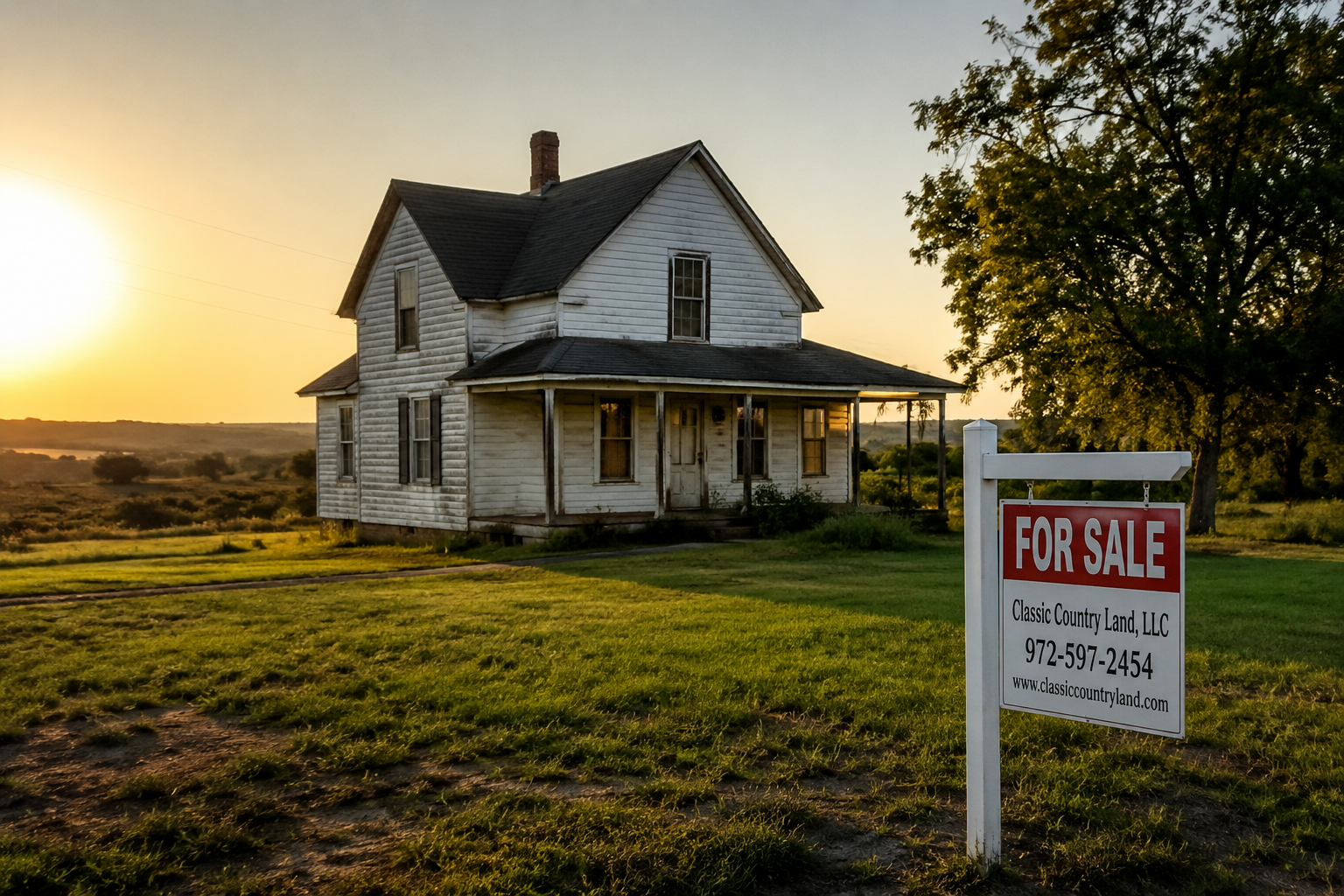
How to price a house with no comps is one of the more common problems in real estate — and one most pricing guides skip entirely. Your agent pulls up the comps report and it’s almost empty: maybe your house sits on five acres outside town, it’s the only mid-century rebuild on a block of 1970s ranches, or you live in one of the twelve states that doesn’t publish what homes actually sell for. Whatever the reason, here’s the real method appraisers reach for once the easy answer disappears.
The No-Comps Method
When the comps report comes back empty, this is what you do next.
Five real steps — widen, reach back, calculate, cross-check, and know when to call a pro — used by appraisers, not guesswork.
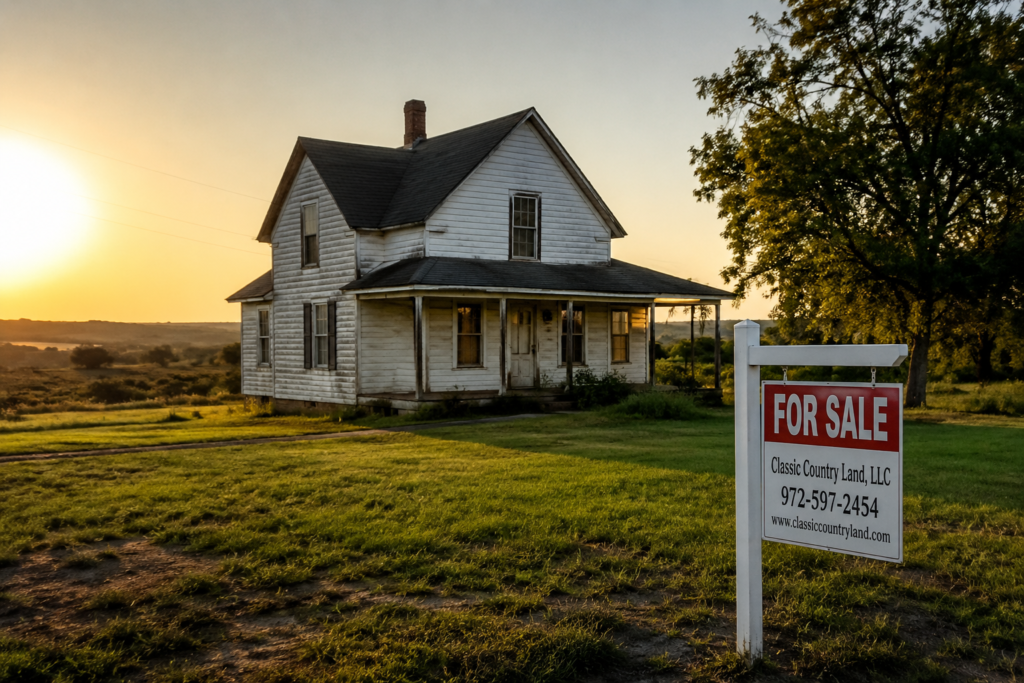
When there are no comparable sales nearby, you build a price estimate instead of pulling one from a report. Widen your search radius in stages, reach further back in time for usable sales, calculate a price-per-square-foot baseline and a cost-to-rebuild estimate, then check that range against active and expired listings. If the numbers still disagree by more than 10 to 15 percent, a licensed appraisal closes the gap. It takes longer than reading a comps sheet, but it’s just as reliable.
🔑 Key Takeaways
- ✓No comps doesn’t mean no data — it means building your price in layers instead of reading it off one report.
- ✓Widen your search radius in small, deliberate steps. Jumping straight to a different zip code skips useful information in between.
- ✓Price per square foot only works once you adjust for lot size, age, and finish level. Used raw, it’s misleading.
- ✓Twelve states don’t publish sale prices at all, so “no comps” is the default there, not the exception.
- ✓A licensed appraisal, usually $400 to $600, earns its fee once your own estimates disagree by more than 10 to 15 percent.
- ✓Active and expired listings won’t tell you what buyers actually paid. They’ll tell you what buyers are currently rejecting, which matters too.
How to Price a House With No Comps: Why the Data Runs Out
A comp — short for comparable sale — is a home similar enough to yours, sold recently enough, and close enough geographically that its sale price tells you something real about what yours is worth. Zillow’s own guidance for what counts as a usable comp is specific: within a quarter to half mile, listed within the last three months, roughly the same age, and square footage within about 10 percent of yours. That’s a tight box. Plenty of ordinary, perfectly sellable houses fall outside it.
The book they should hand you with the keys
Everything in real estate finally explained like a friend would — 73 pages, 3 levels, from your first viewing to your first investment property. Read it once, keep it forever.
Instant download
Your comps search can come back thin — or empty — for a handful of reasons, and each one points to a slightly different fix. Rural and semi-rural properties often sit too far from any other recent sale. Unique or heavily renovated homes don’t match anything nearby in style or condition. New-construction subdivisions sometimes have no resale history yet, only builder pricing. Low-inventory neighborhoods might not have had a sale in a year or more. And in twelve U.S. states, sale prices simply aren’t public record at all, which we’ll get to later in this guide. If you’re also weighing selling without an agent, this problem tends to show up even more, since you won’t have an agent’s MLS access to lean on by default.
It helps to be honest about which category you’re in, because “a few thin comps” and “genuinely zero comps” call for slightly different amounts of the same method. If you’ve got two or three sales that are close but not perfect, you’re mostly adjusting. If you’ve got nothing within a reasonable radius or timeframe, you’re building an estimate from scratch using the steps below — a normal, solvable problem, not a sign your house is unsellable. For the broader picture on where your number should land, our guide on figuring out what your home is actually worth is a useful starting point before you dig into the no-comps specifics below. You can also browse the rest of our Selling a Home guides while you’re getting ready to list.

The 5-Step Method at a Glance
Widen the radius
Reach back in time
Run the cost & $/sq ft numbers
Check active & expired listings
Call an appraiser if needed
Step 1: Widen Your Radius Without Grabbing Homes That Don’t Actually Match
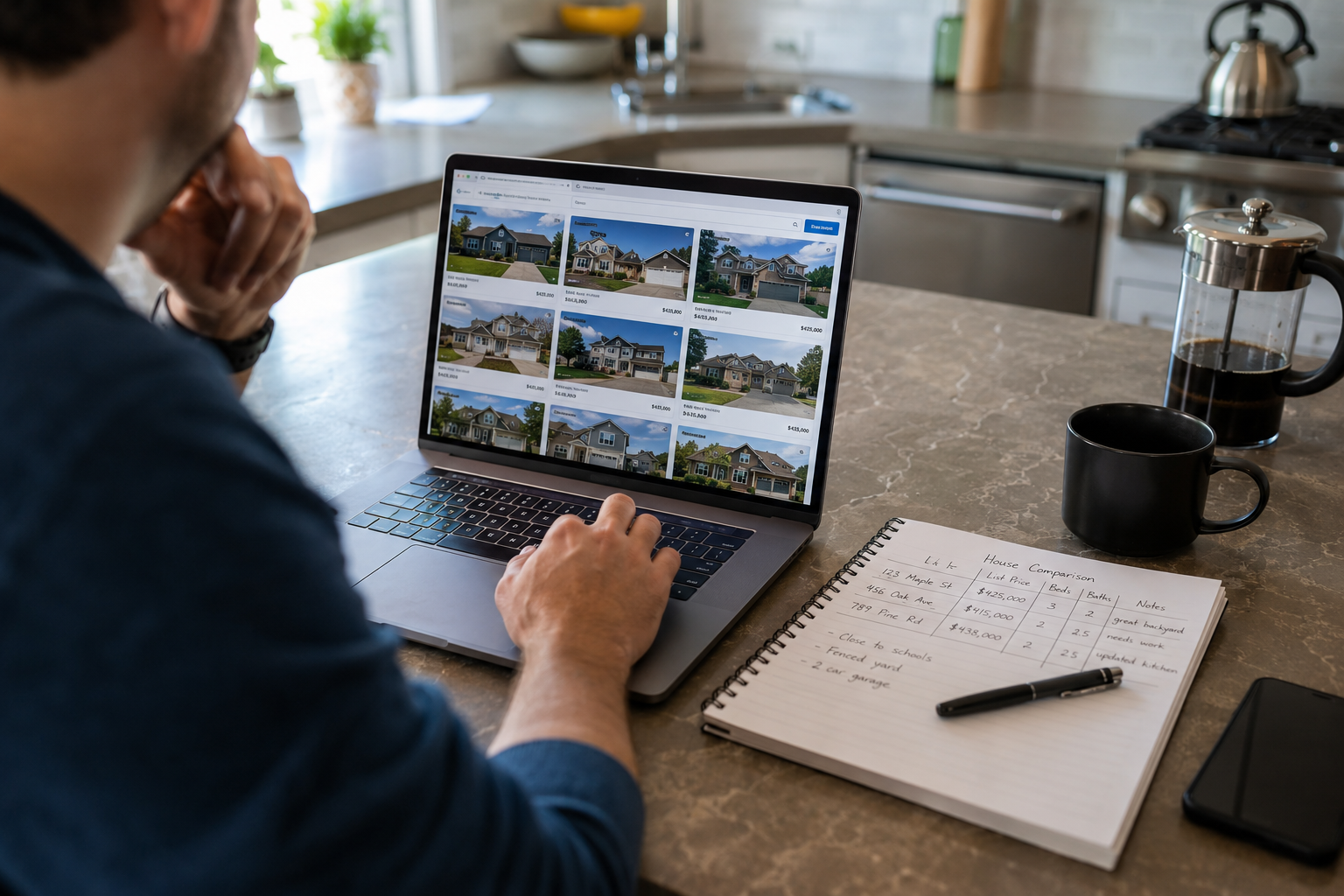
The instinct is to widen your search until something shows up, then stop. That’s how you end up comparing your house to a property that isn’t actually similar, just nearby. Do it in stages instead.
Start at your original radius — usually a quarter to half mile — and expand outward in half-mile increments, checking after each step whether you’ve picked up anything usable. Still empty past a mile? Expand into the next subdivision or neighborhood over, not just further down the same road. A neighborhood boundary can mean a different school district, a different HOA, or a different buyer pool entirely, and that matters more than raw distance.
As you widen, keep bracketing the same characteristics you started with: age, size, condition, and quality. A five-bedroom home two miles away isn’t a fair comparison for your three-bedroom just because it’s the closest sale you’ve found. If you have to stretch on distance, don’t also stretch on size and condition — hold at least two of the three roughly constant.
Stop googling one term at a time. Understand the whole thing.
Articles answer one question. Real Estate, Made Readable answers the next fifty — 73 pages that walk you from total beginner to confident decision-maker, in plain English.
- Buying, selling, renting & investing — all in one place
- Every term explained the first time it appears
- Diagrams, worked examples & decision cheat-sheets
Instant PDF download
💡 Tip: County assessor records are useful here even without sale prices attached, because they show square footage, lot size, and year built for homes you can’t see the interior of. Cross-reference a few candidates before deciding which “expanded” comps actually belong in your set. Three loosely similar sales chosen carefully beat one perfect match plus five mismatches included because you needed the data points.

Step 2: Reach Back in Time Without Trusting Stale Numbers
Most comps guidance tells you to stick to sales within the last three months. That’s good advice when it’s available — and useless advice when it isn’t. If nothing has sold near you in three months, reach back six, then twelve, then eighteen if you have to.
The catch is that older data needs adjusting, or it will mislead you. If your local market has moved 4 percent since a comparable sale closed eight months ago, that sale’s price needs to move with it — up in an appreciating market, down in one that’s cooled. You can get a rough trend number from a state or metro-level housing index, or simply ask a local agent what the year-over-year change has looked like; most can tell you without pulling a report.
One more wrinkle: if the property you’re using as an older comp has since been renovated, or yours has, the price gap between then and now reflects the renovation as much as the market. Separate those two effects mentally before you lean on the number.
⚠️ Warning: A sale from eighteen months ago, adjusted for trend, is more useful than no data at all — but treat it as a wider estimate, not a precise number. The further back you go, the more that single data point should function as one input among several, not your headline figure.

Step 3: The Two Formulas Appraisers Use When Comps Won’t Cooperate
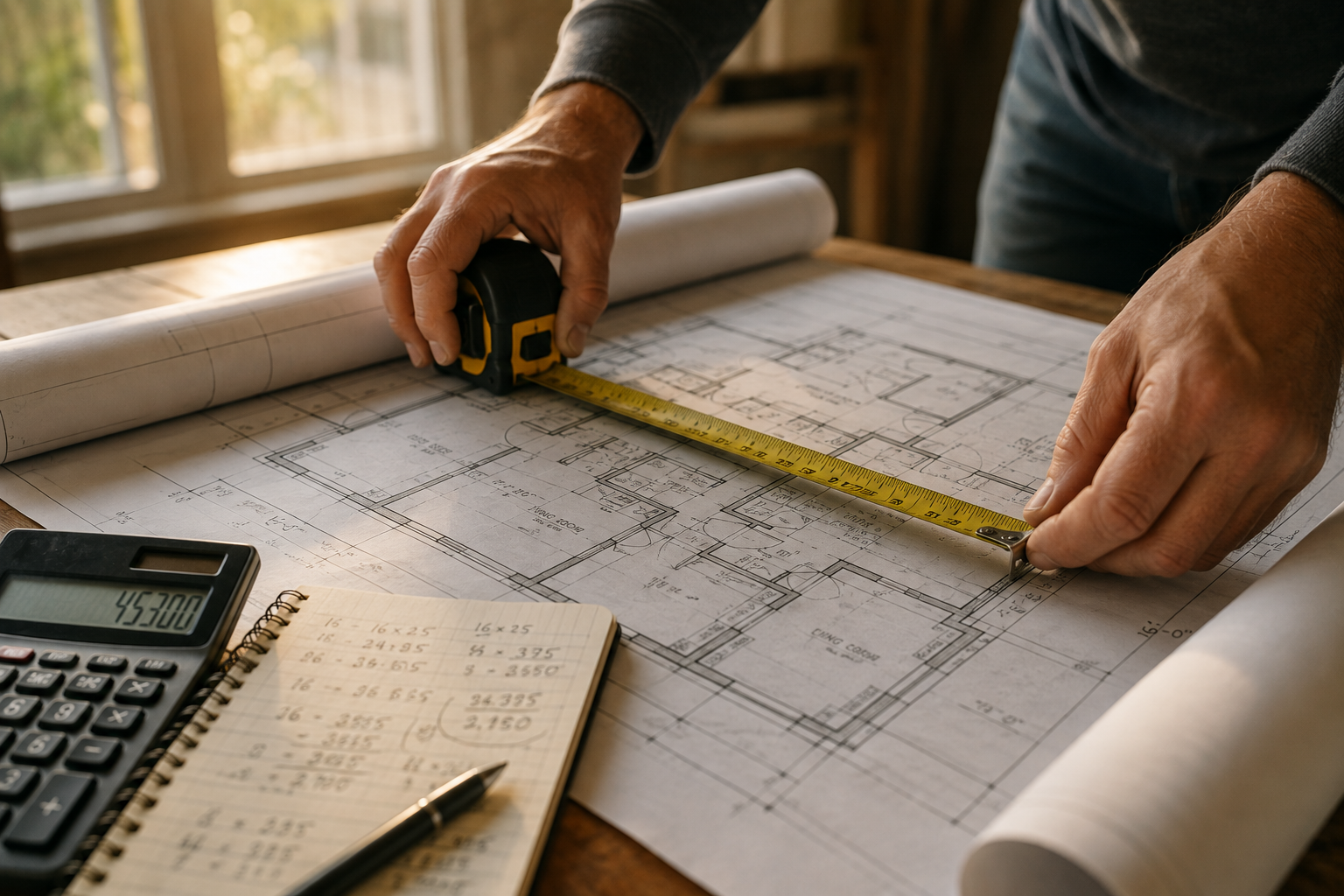
When comparable sales won’t cooperate, appraisers fall back on two other approaches: price per square foot, and the cost approach. Neither replaces real comps, but together they build a credible range when comps are thin or missing entirely.
Price per square foot is the simpler of the two. Take a handful of recent sales — even ones you rejected as comps for being too far or too different — and divide each sale price by its square footage. That gives you a per-square-foot baseline for the area. Multiply that baseline by your home’s square footage, then adjust up or down for lot size, finish quality, and any features the baseline homes didn’t have. This number is a starting point, not a final answer: a 3,000-square-foot home on two acres with an updated kitchen isn’t priced the same, per square foot, as a 3,000-square-foot home on a standard lot with original 1980s finishes.
Stop googling one term at a time. Understand the whole thing.
Articles answer one question. Real Estate, Made Readable answers the next fifty — 73 pages that walk you from total beginner to confident decision-maker, in plain English.
- Buying, selling, renting & investing — all in one place
- Every term explained the first time it appears
- Diagrams, worked examples & decision cheat-sheets
Instant PDF download
The cost approach works differently. It asks: what would it cost to buy this land and build this exact house on it today? Start with your land value alone, often available from your county assessor, separate from the total property value. Add the cost to rebuild your home’s square footage at current local construction costs, which a local builder or contractor can usually estimate per square foot within a reasonable range. Then subtract depreciation for the home’s age and condition — a rough rule of thumb is 1 to 1.5 percent of replacement cost per year of the home’s age, adjusted up if it needs real repairs or down if it’s been well maintained or updated.
Here’s a simplified example — land value plus rebuild cost, minus depreciation:
$85,000
Land value
$330,000
Rebuild cost (2,000 sq ft × $165)
−$71,280
Depreciation (18 yrs × 1.2%)
≈$343,700
Estimated value
That’s not a number you’d list at exactly — it’s a floor-to-ceiling range you can sanity-check against whatever comps you do have, however imperfect. When the cost approach and your widened-radius comps land within 10 to 15 percent of each other, you’re probably close. When they’re far apart, that gap usually points to something specific: an inflated land value estimate, an unrealistic construction cost figure, or a comp that wasn’t as similar as it looked.
Realistely Field Guide
Real Estate, Made Readable
The complete plain-language guide to buying, selling, renting, and investing — 73 pages, three levels, no jargon. Includes a full walkthrough of pricing, comps, and what to do when the data is thin.
See What’s Inside — $19 →Step 4: What Active and Expired Listings Are Quietly Telling You
Sold comps tell you what buyers actually paid. Active and expired listings tell you something almost as useful: what buyers are currently willing to pay, and what they’ve already turned down.
Active listings set your ceiling. If three homes roughly similar to yours are currently listed between $410,000 and $440,000 and haven’t sold yet, that’s the top of your realistic range — buyers are seeing those asking prices and, so far, not biting hard enough to close. You can reasonably price at or slightly below that range, not above it, unless your home is genuinely stronger on condition or location.
Expired listings are more valuable than most sellers realize, precisely because they represent failure. A home that expired unsold at $425,000 after 90 days on the market is telling you, plainly, that $425,000 was too high for what buyers were willing to pay for that property. Find two or three expired listings with details close to yours, and you’ve effectively found the floor of “too expensive” for your area — price meaningfully under that number, not near it. This same logic is central to pricing to sell faster rather than sitting on the market while buyers quietly pass you by.
Pull both active and expired listings from the same widened radius and extended timeframe you used in the earlier steps, and look at list-to-sale ratios where you can find them — the gap between original asking price and eventual sale price on any homes that did close, even imperfect matches. A neighborhood where homes routinely sell for 3 percent under ask is telling you something different than one where homes sell at or above asking within days. That gap should shape how aggressively or conservatively you price, independent of the exact dollar figure.
Step 5: The Moment It’s Worth Paying an Appraiser $500
Everything above gets you a defensible range on your own. At some point, though, the range itself becomes the problem — your widened-radius comps say one thing, your cost approach says another, and they’re not close enough to trust.
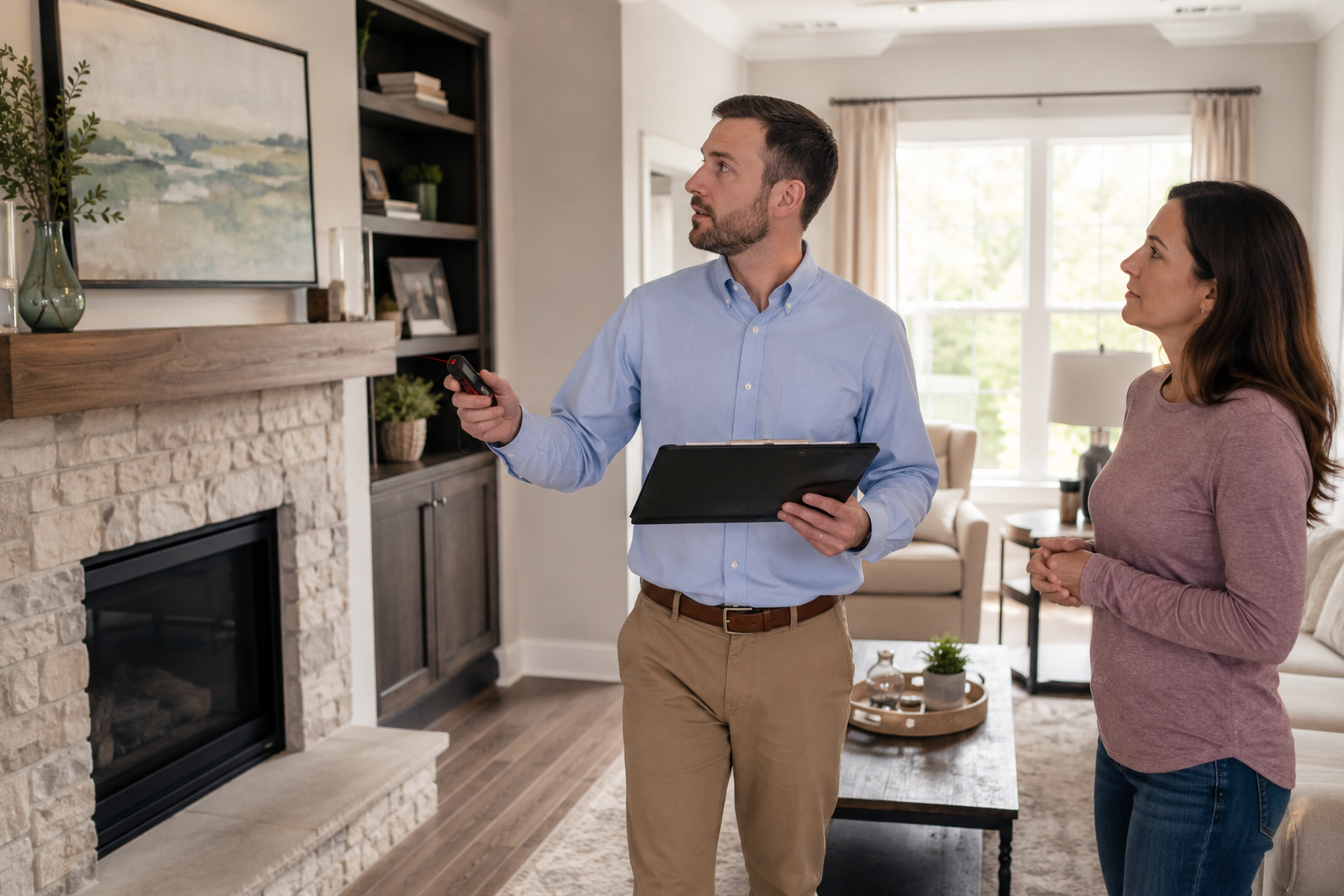
A licensed appraiser typically charges $400 to $600 for a single-family home appraisal, and for that fee, they use all three professional methods — sales comparison, cost approach, and, for some properties, an income approach — plus judgment that comes from doing this professionally, day after day, in your specific market. They can also reach sale data you may not be able to access on your own, including, in some cases, non-public MLS records even in states where public records don’t show sale prices.
It’s worth the cost in a few specific situations: when your own estimates disagree by more than 10 to 15 percent and you can’t tell which is closer to right; when the property itself is unusual enough that no amount of adjusting makes the comps feel solid — a log cabin, a converted barn, a home with acreage in a suburban area; when you’re disputing a property tax assessment and need a formal, defensible number; or when the sale involves other parties who need an unbiased figure, like a divorce settlement or an estate split among siblings. It’s also worth checking what you’ll actually net at closing before you lock in a number, since that changes how much room you have to negotiate.
An appraisal isn’t the same thing as a free Comparative Market Analysis from an agent. A CMA is an informed opinion, useful and often accurate, but not a credentialed, defensible valuation. An appraisal is.
“A confident, well-supported number beats a perfect one you can’t defend.”
The 12 States Where Your House Might Never Have a “Comp”
If you’re in Alaska, Idaho, Kansas, Louisiana, Mississippi, Missouri (in some counties), Montana, New Mexico, North Dakota, Texas, Utah, or Wyoming, everything above still applies — but you’re also dealing with something structural. These are the twelve non-disclosure states, where the price a home actually sold for is never recorded as public record. Not hard to find. Not delayed. Simply never public.
That’s different from a home that’s hard to price because it’s rural or unusual. In a non-disclosure state, even a totally ordinary house in a dense subdivision with dozens of recent sales will show up as “sold” in public records with no price attached. The listing services and public sites that pull from county records elsewhere just don’t have the number to show.
Nobody is born knowing what escrow means. The people who seem confident just got a calmer explanation than you did.
That's the whole idea behind our field guide — 73 pages that explain buying, selling, renting, and investing the way a patient friend would. This article is one piece of the picture. The book is the picture.
If that’s your situation, the widened-radius and reach-back-in-time steps above won’t fully solve the problem on their own, because the underlying data isn’t public no matter how far you search. Your best options go around the public record rather than through it: ask a local agent for a Comparative Market Analysis pulled from the MLS, which typically does include actual sold prices even when public records don’t; request a report from a title company, which often has access to non-public transaction data; or go straight to a licensed appraiser, who can usually reach sale data you can’t. County assessor records still show property characteristics — square footage, lot size, year built — even without a price, so they remain useful for narrowing down which properties are genuinely similar to yours; you’ll just need one of the three sources above to attach real numbers to them.
📝 Note: If you’re not sure whether your state discloses sale prices, it’s worth confirming directly rather than assuming — a handful of states have partial or county-by-county rules rather than a single blanket policy.

Here’s how the five methods stack up side by side:
5 Pricing Mistakes That Cost No-Comps Sellers Real Money
❌ Using price per square foot without adjusting for lot size or finish. Treating a 3,000-square-foot mansion and a 3,000-square-foot farmhouse as interchangeable throws the whole number off. Adjust for quality, not just size.
❌ Trusting an automated estimate when nearby data is thin. As Bankrate notes, automated valuation models are a useful starting point but far from perfect — and they get visibly less accurate as the number of nearby sales drops. Treat them as one input, not the answer.
❌ Anchoring to what you paid, or what you need. The market doesn’t know your mortgage balance, and pricing based on what you need to net almost always backfires.
❌ Ignoring expired listings. They’re some of the most useful data available, because they show you exactly where “too expensive” starts in your area.
❌ Waiting too long to bring in a professional. If your own estimates disagree by more than 10 to 15 percent, weeks of a stale, overpriced listing usually cost more than an appraisal fee would — and by then, buyers have often started wondering what’s wrong with the place, which is also why staging before you list matters alongside getting the number right.
FAQ: How to Price a House With No Comps
Before You List
Real Estate, Made Readable
The plain-language guide to pricing, staging, negotiating, and closing — 73 pages, three levels, from your first viewing to your first sale. No jargon, no hype.
See What’s Inside — $19 →This article is educational and general in nature. It is not financial, legal, or appraisal advice, and Realistely is not a brokerage, lender, or licensed appraiser. Pricing methods, costs, and state disclosure rules can vary by location and change over time. For a decision about your specific property, consult a licensed real estate agent, a licensed appraiser, or another qualified professional in your area.
That’s the real answer to how to price a house with no comps — not a single lookup, but five layered checks that lead you to a number you can defend. Widen your radius, adjust for time, run the cost numbers, and let active and expired listings check your work. When the range still won’t settle, a licensed appraiser earns their fee by doing in one visit what would otherwise take you all weekend.
Free guide
Confused by real estate? Get the plain-English guide.
Buying, selling, investing & the legal basics — explained simply in 20 pages. Free, straight to your inbox.
No spam. Unsubscribe anytime.