
Somewhere between your accepted offer and closing day, a settlement statement lands with two columns of fees — and nobody explains which ones are actually yours. The confusion costs real money, because several of those charges are negotiable and some are traditionally the other side’s to pay. This guide answers who pays closing costs buyer or seller, item by item, and shows you exactly how to shift some of them across the table.
Both sides pay closing costs, but different ones. Buyers typically pay 2–5% of the purchase price, covering lender fees, appraisal, title insurance, and prepaid taxes and insurance. Sellers typically pay 6–9%, dominated by real estate commissions, plus transfer taxes in many states. Almost every line is negotiable: buyers can request “seller concessions” where the seller pays part of the buyer’s costs, especially in slower markets.
Key takeaways
- Buyer closing costs run 2–5% of the purchase price; on a $350,000 home that’s $7,000–$17,500 on top of your down payment.
- Sellers usually pay more in total — commissions alone often run 5–6% — but their costs come out of sale proceeds, not cash.
- Seller concessions can shift thousands of dollars of buyer costs to the seller, but lenders cap them at 3–9% depending on loan type.
- Who pays transfer taxes, title insurance, and escrow fees is set by local custom, not law — and custom is negotiable in writing.
- Your Loan Estimate (received within 3 days of applying) and Closing Disclosure (3 days before signing) must match closely — compare them line by line.
- You can shop for several services yourself — title insurance, home insurance, and sometimes the settlement agent — and save hundreds.
Who pays closing costs, buyer or seller? The honest short answer

The clean answer is that closing costs are split by function: costs related to getting your mortgage and protecting your ownership are the buyer’s, while costs related to selling the property and transferring it are the seller’s. That’s the default. But the default is written by local custom and the purchase contract — not by law — which means nearly every fee can be moved during negotiation. The contract you signed decides everything, which is one more reason to understand how real estate purchase agreements work before you’re staring at a settlement statement.
The book they should hand you with the keys
Everything in real estate finally explained like a friend would — 73 pages, 3 levels, from your first viewing to your first investment property. Read it once, keep it forever.
Instant download
The totals surprise people on both sides. Buyers focus so hard on the down payment that the extra 2–5% in fees lands like an ambush — on a $400,000 purchase, that’s $8,000 to $20,000 in cash due at signing, on top of the down payment. Sellers are surprised in the other direction: their costs are usually larger (6–9% of the price once commissions are included), but since they’re deducted from sale proceeds rather than paid in cash, they sting less visibly. Neither side writes one check labeled “closing costs” — it’s fifteen to twenty-five separate line items, and knowing which column each belongs in is the entire game.
What buyers pay: the full list, with real numbers
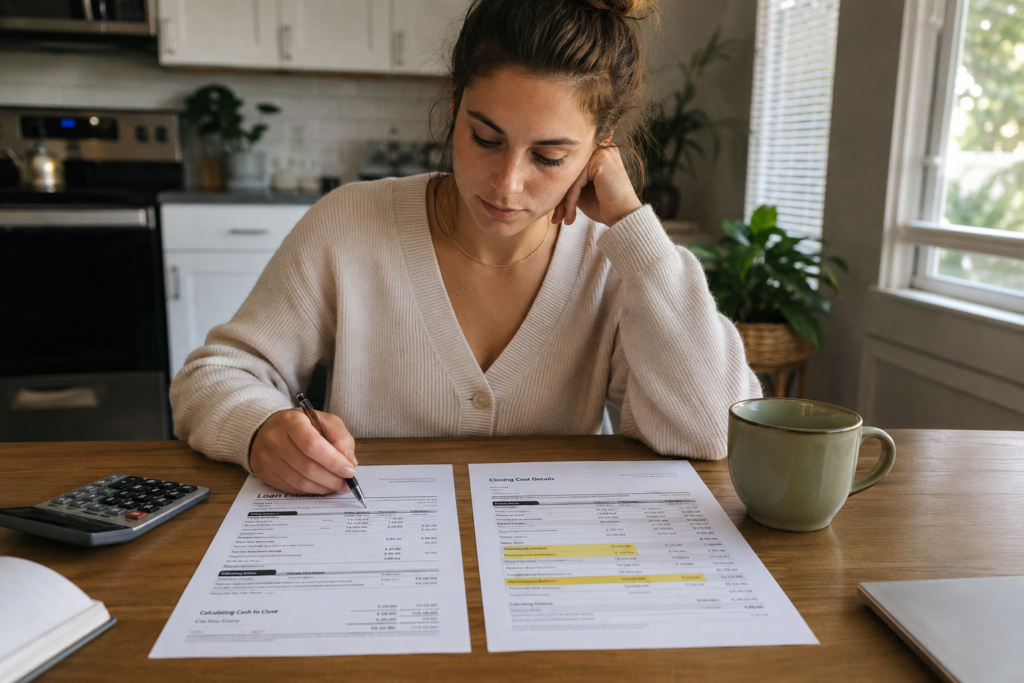
Buyer closing costs fall into three buckets: lender charges, third-party services, and prepaids. Lender charges are the fees for creating your mortgage — origination or underwriting fees, typically 0.5–1% of the loan, plus any discount points you choose to buy your rate down. Third-party services are everything the transaction requires from other professionals: the appraisal ($500–$800), credit report ($30–$60), lender’s title insurance policy, settlement or escrow fee, and recording fees at the county. Prepaids are your own future expenses collected upfront: several months of property taxes and homeowner’s insurance to seed your escrow account, plus interest covering the days between closing and your first payment.
Two documents keep this honest. Within three business days of your full mortgage application, your lender must send a Loan Estimate laying out every projected cost. Three business days before signing, you get the Closing Disclosure with the final numbers. Federal rules limit how much certain fees can increase between the two documents — some can’t rise at all — and the Consumer Financial Protection Bureau’s home-buying toolkit walks through the comparison. This paperwork checkpoint sits inside the broader escrow period we mapped in our guide to what happens after your offer is accepted.
What sellers pay: commissions, transfer taxes, and prorations

The seller’s column is shorter but heavier. The dominant line is real estate commission — historically 5–6% of the sale price covering both agents, though commission structures have become far more negotiable in recent years, and who pays the buyer’s agent is now itself a negotiation point written into offers. On a $400,000 sale, commissions alone can exceed $20,000, which dwarfs everything else on either side of the ledger.
Beyond commissions, sellers typically pay transfer taxes (a state, county, or city tax on transferring the deed, ranging from trivial to painful depending on location), their share of the escrow or settlement fee, any attorney fees, and prorations — the seller’s portion of property taxes and HOA dues covering the days they still owned the home that year. Sellers with a mortgage also pay it off at the table, sometimes with a small recording or reconveyance fee. If you’re on the selling side and trying to protect your net, pricing correctly from day one matters more than shaving any fee — start with an accurate read of how much your house is actually worth.
Stop googling one term at a time. Understand the whole thing.
Articles answer one question. Real Estate, Made Readable answers the next fifty — 73 pages that walk you from total beginner to confident decision-maker, in plain English.
- Buying, selling, renting & investing — all in one place
- Every term explained the first time it appears
- Diagrams, worked examples & decision cheat-sheets
Instant PDF download
Seller concessions: how buyers get the seller to pay their costs

A seller concession (also called a seller credit) is the mechanism that makes the whole “who pays” question negotiable: the seller agrees, in the contract, to pay a stated amount toward the buyer’s closing costs. The money isn’t a check — it’s a credit on the settlement statement that reduces the cash the buyer must bring. For a first-time buyer scraping together every dollar, a $10,000 concession can matter more than a $15,000 price cut, because the concession reduces cash due at closing while a price cut mostly reduces the loan.
Concessions have lender-imposed ceilings that depend on loan type and down payment. Conventional loans allow roughly 3% of the price with a small down payment, rising to 6–9% with larger down payments; FHA allows up to 6%; VA limits certain concessions to 4%. Ask for more than the cap and the excess simply evaporates — you can’t pocket it. Whether you can get a concession at all is a market-temperature question: in a slow market or on a stale listing, concessions are routine; in a bidding war, asking for one weakens your offer. If you’re competing against other buyers, read our playbook on winning multiple-offer situations without overpaying before deciding what to request.
Location changes the answer: state customs, and a note for Canada
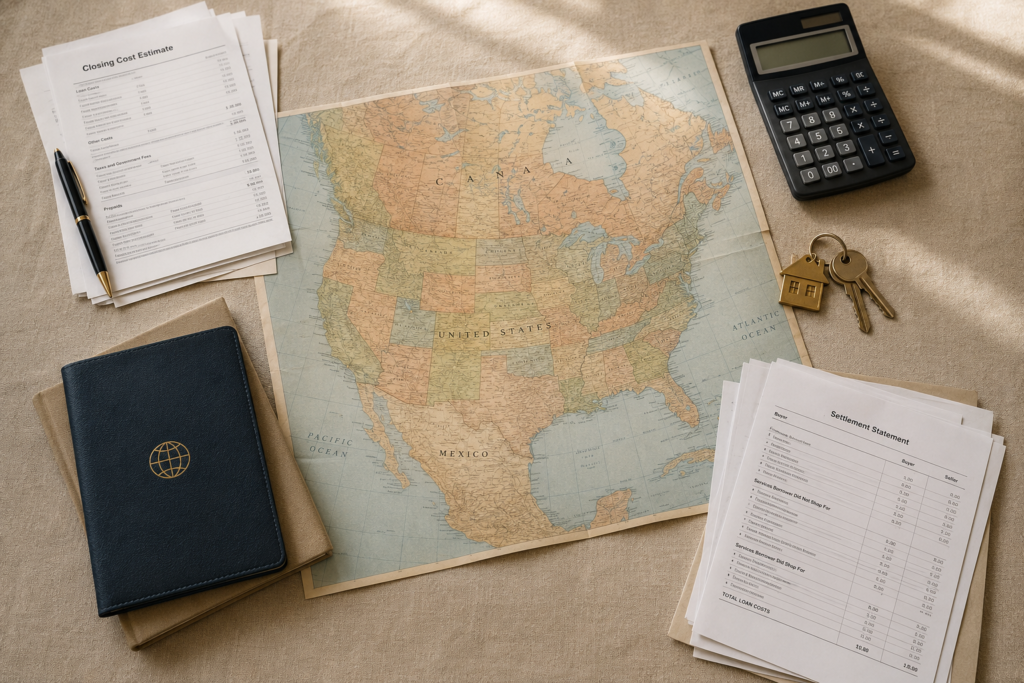
The same fee lands in different columns depending on where the property sits. Owner’s title insurance is customarily paid by the seller in some states and the buyer in others; escrow fees are split in some markets and one-sided in others; and transfer taxes range from effectively zero in a handful of states to serious money in high-tax cities, occasionally with local custom putting part on the buyer. None of this is statutory destiny — “custom” just means the default everyone expects — but deviating from custom in your offer is a negotiation move your agent should make deliberately, not accidentally.
Canadian buyers face a related but different stack: land transfer tax is the big line (paid by the buyer in most provinces, with first-time buyer rebates in several), plus legal fees, title insurance, and adjustments. There’s no US-style escrow prepaid system; lawyers or notaries close the deal. The categories rhyme, but the amounts and payers differ enough that you should map them separately — our step-by-step guide to buying your first home in Canada covers the Canadian cost stack in context.
Six legitimate ways to lower your closing costs
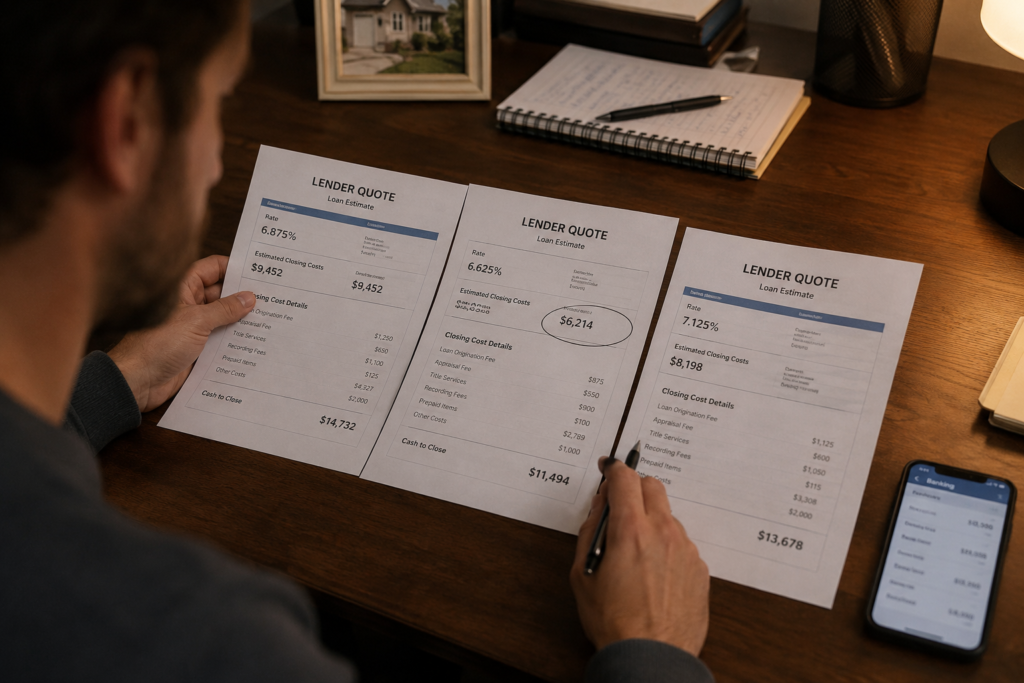
This section is where the reading pays for itself. First, shop lenders — not just for rate, but for fees; get three Loan Estimates within a short window (the credit checks count as one inquiry) and compare the origination charges line, where differences of $1,000+ between lenders are common. Second, ask about lender credits: accepting a slightly higher rate in exchange for the lender covering fees can make sense if you’ll refinance or move within a few years. Third, shop the services you’re allowed to shop — your Loan Estimate literally lists them — especially title insurance, where premiums for identical coverage vary meaningfully in many states.
The book they should hand you with the keys
Everything in real estate finally explained like a friend would — 73 pages, 3 levels, from your first viewing to your first investment property. Read it once, keep it forever.
Instant download
Fourth, ask the title company about a “reissue rate”: if the seller bought recently, a discounted title premium may be available. Fifth, close late in the month to shrink prepaid interest — closing on the 28th instead of the 3rd cuts that line by 80%, a one-time savings worth having if your cash is tight. Sixth, negotiate concessions with evidence rather than hope: a stale listing, a soft comparable-sales picture, or inspection findings all justify the ask. And keep perspective — closing costs are the entry fee, not the whole bill. The recurring expenses that follow are larger over time, and our breakdown of the hidden costs of homeownership shows what the first years actually cost.
Common mistakes buyers and sellers make with closing costs
1. Budgeting for the down payment and forgetting the cash-to-close
The number that matters is “cash to close” — down payment plus closing costs plus prepaids, minus credits — and it appears on your Loan Estimate. Buyers who budget only the down payment discover a five-figure shortfall three weeks before signing, then scramble for gift funds that underwriting must document. Get a cash-to-close estimate from your lender before you make offers, not after.
2. Never comparing the Closing Disclosure to the Loan Estimate
Federal rules cap how much specific fees may grow between the two documents, and errors happen more often than the industry admits. Buyers who skip the comparison pay whatever’s printed. Sit down with both documents for twenty minutes during your three-day review window, and question any line that grew — the settlement agent must explain or fix it.
3. Asking for concessions above the loan-type cap
Negotiating a 7% concession on a loan capped at 3% wastes leverage — the extra 4% vanishes rather than converting to a price cut. Know your cap before countering, and if the seller is willing to give more than the cap allows, take the remainder as a price reduction instead. Your lender can tell you the exact ceiling in one phone call.
4. Sellers ignoring prorations and payoff timing
Sellers fixate on commission and gloss over prorated taxes, HOA transfer fees, and per-diem mortgage interest through the funding date — smaller lines that together can move the net by thousands. Ask the settlement agent for a draft seller’s statement a week early, and check the mortgage payoff includes the correct number of interest days.
5. Treating “customary” as mandatory
“The buyer always pays that here” is a default, not a law. In a soft market, buyers get sellers to cover owner’s title policies and escrow fees regularly; in hot markets, sellers push transfer taxes across the table. Custom is your starting position. The contract is the finish line — and only what’s written in it counts.
FAQ: who pays closing costs, buyer or seller
How much are closing costs for a buyer?
Plan on 2–5% of the purchase price, paid in cash at closing on top of your down payment. On a $350,000 home that’s $7,000–$17,500, covering lender fees, appraisal, title insurance, settlement charges, and prepaid taxes and insurance. Your Loan Estimate shows your specific number within three days of applying.
Can closing costs be added to the loan?
On a standard purchase, mostly no — the loan is capped by the price and appraisal, so costs must be paid in cash, covered by seller concessions, or offset with lender credits in exchange for a higher rate. Some specific refinance and government programs allow rolling costs in, but a typical purchase does not.
Does the seller ever pay all the buyer’s closing costs?
Yes — it’s common on slow listings, new construction (builders love credits more than price cuts), and buyer’s markets. The limit is the concession cap for your loan type, usually 3–6% of the price. Everything hinges on negotiation and market temperature; sellers with three offers rarely pay anyone’s costs but their own.
Who pays closing costs on a cash purchase?
Cash removes every lender-related fee — no origination, appraisal (optional), lender’s title policy, or prepaid escrow. The buyer still typically pays settlement fees, recording, and owner’s title insurance per local custom; the seller still pays commissions and transfer taxes. Total buyer costs often drop below 1% with cash.
Are closing costs tax deductible?
Mostly no. Discount points can be deductible in the year paid if you itemize and meet the rules, and prepaid property taxes may count toward your property-tax deduction. The rest — title, appraisal, settlement fees — generally isn’t deductible but may adjust your cost basis when you sell. Confirm specifics with a tax professional.
When do you actually pay closing costs?
At the closing table, as part of one wire transfer for your total cash to close. A few items are paid earlier as services happen — the inspection and often the appraisal. Your Closing Disclosure, delivered at least three business days before signing, shows the exact wire amount, and you should verify wiring instructions by phone.
The bottom line on who pays what
The answer to who pays closing costs, buyer or seller, is written fresh into every contract — custom sets the defaults, but negotiation sets the outcome, and buyers who know the concession rules walk in with an advantage worth thousands. Get your cash-to-close number from your lender before you offer, and see where these fees land in the bigger picture with our week-by-week guide to what happens after your offer is accepted — then browse the rest of our first-time homebuyer guides, starting with the top 10 mistakes first-time homebuyers make.
Stop googling one term at a time. Understand the whole thing.
Articles answer one question. Real Estate, Made Readable answers the next fifty — 73 pages that walk you from total beginner to confident decision-maker, in plain English.
- Buying, selling, renting & investing — all in one place
- Every term explained the first time it appears
- Diagrams, worked examples & decision cheat-sheets
Instant PDF download
Free guide
Confused by real estate? Get the plain-English guide.
Buying, selling, investing & the legal basics — explained simply in 20 pages. Free, straight to your inbox.
No spam. Unsubscribe anytime.