
Your security deposit is probably the largest interest-free loan you’ve ever made — one or two months’ rent, sitting in your landlord’s account, waiting for a move-out day that decides whether you see it again. Most renters lose part of it not to real damage, but to weak documentation and missed deadlines. This guide covers how to get security deposit back in full: the evidence to build, the move-out routine that works, and the exact escalation path when a landlord won’t pay.
To get your security deposit back in full: document the unit’s condition with dated photos at move-in and move-out, give proper written notice, clean thoroughly, repair minor damage you caused, attend a walkthrough with the landlord if possible, and provide your forwarding address in writing. Landlords can only deduct for unpaid rent, cleaning beyond normal wear and tear, and damage — and most jurisdictions give them a strict deadline (commonly 14–30 days) to return the money with an itemized statement.
Key takeaways
- Normal wear and tear — faded paint, minor scuffs, worn carpet paths — cannot legally be deducted from your deposit anywhere in North America or the UK.
- Your move-in photos are the single most valuable document you’ll ever create as a renter; without them, disputes become your word against the landlord’s.
- Give written notice exactly as your lease requires — improper notice is one of the few fully legal ways to lose deposit money.
- Provide your forwarding address in writing at move-out; landlords “couldn’t find you” is a surprisingly common and preventable excuse.
- Return deadlines are strict — commonly 14–30 days depending on your state or province — and missing them can cost the landlord penalties of 2–3x the deposit.
- A calm, cited demand letter recovers most wrongfully held deposits without ever seeing small claims court.
How security deposits actually work — the rules of the game

A security deposit is your money held in trust against three specific things: unpaid rent, damage beyond normal wear and tear, and (where the lease says so) cleaning needed to return the unit to its move-in condition. That’s the entire legal menu in most jurisdictions. It is not a fund for the landlord’s upgrades, a fee for the inconvenience of turnover, or automatic payment for repainting a unit you lived in for four years. Deductions outside those categories are wrongful, and the law in most states, provinces, and the UK backs the tenant explicitly.
Nobody is born knowing what escrow means. The people who seem confident just got a calmer explanation than you did.
That's the whole idea behind our field guide — 73 pages that explain buying, selling, renting, and investing the way a patient friend would. This article is one piece of the picture. The book is the picture.
Two structural rules protect you. First, itemization: nearly everywhere, a landlord who withholds any amount must provide a written, itemized statement of deductions — often with receipts or estimates — within a legal deadline that commonly runs 14 to 30 days after you move out (some places allow up to 45–60; the UK’s deposit protection schemes run on their own clock). Second, penalties: many jurisdictions punish landlords who miss the deadline or withhold in bad faith with damages of two to three times the deposit. Those penalty statutes are your quiet leverage — landlords who know you know about them behave differently. Your state or local rules are the version that counts, and the U.S. government’s tenant rights directory links to each state’s specifics.
Normal wear and tear vs. damage: where deposits are won and lost
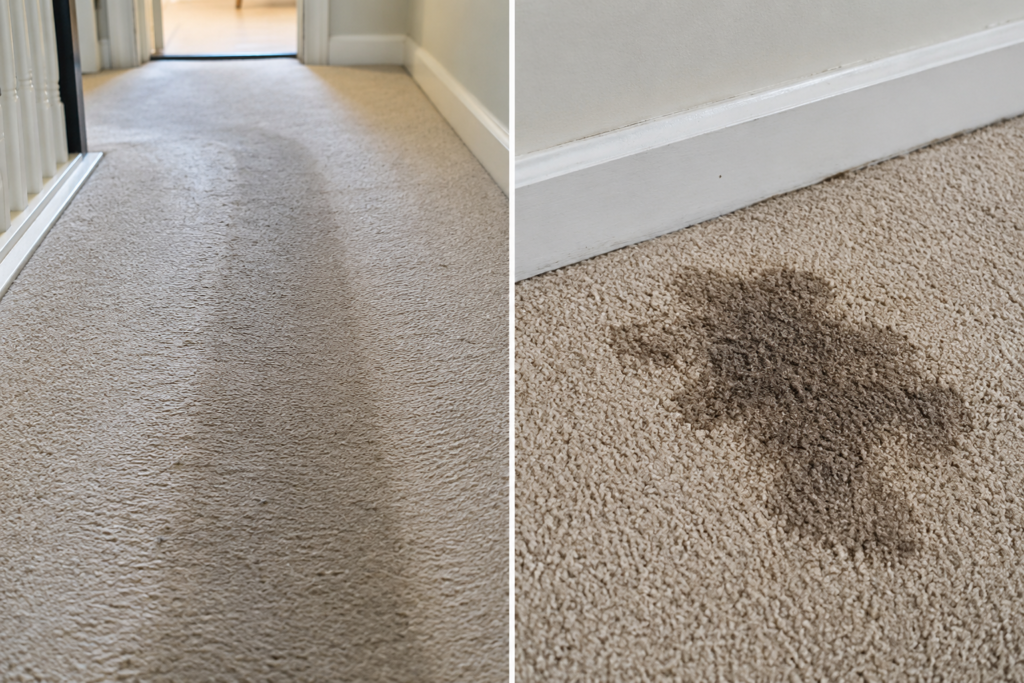
Every deposit dispute eventually reduces to one question: is this wear, or is it damage? Wear and tear is the deterioration that happens when a human simply lives somewhere — and it’s the landlord’s cost of doing business. Damage is deterioration caused by negligence, misuse, or accident — and it’s yours. The line isn’t always obvious, so here’s where common items fall:
Two refinements make you dangerous in a dispute. First, age matters: carpets, paint, and appliances have expected lifespans, and landlords can only charge you the remaining value, not full replacement. A tenant who damages eight-year-old carpet with a five-to-seven-year life expectancy owes little or nothing — depreciation is a word worth using in your demand letter. Second, the lease can’t rewrite the law: a clause charging an automatic “cleaning fee” or making the tenant pay for repainting regardless of condition is unenforceable in many jurisdictions. Read yours closely, and flag anything that smells like a built-in deduction before you sign.
The move-in habit that decides everything: documentation
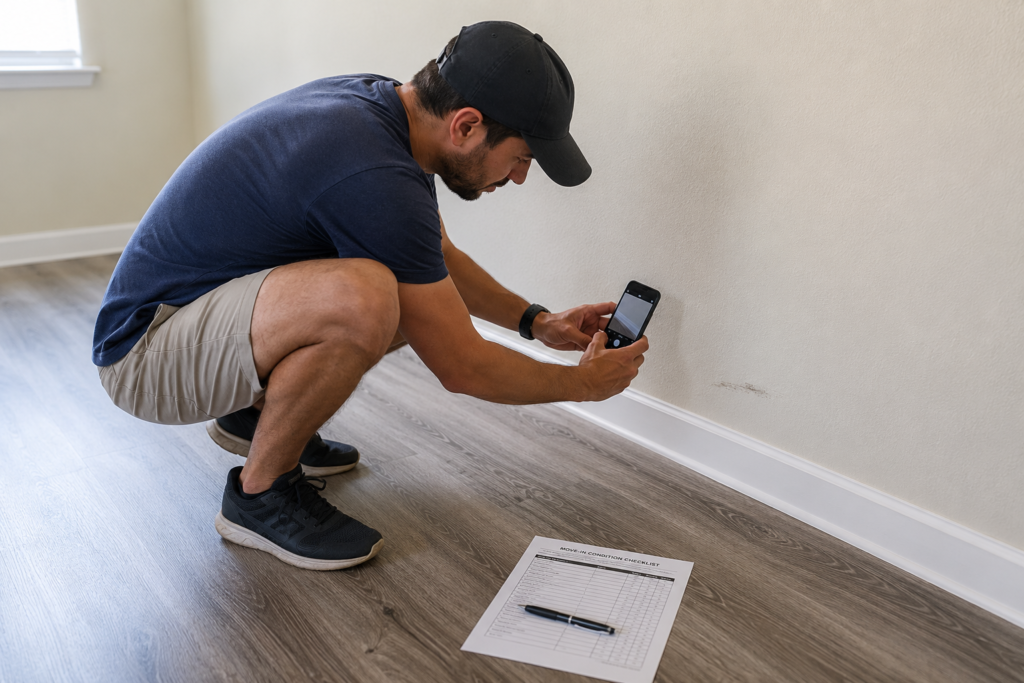
The fight for your deposit is won in your first 48 hours in the unit, years before move-out. Before your boxes are unpacked, walk the empty apartment with your phone and shoot everything: every wall, floor, and ceiling; the inside of the oven, fridge, and cabinets; carpet close-ups; existing stains, chips, scratches, and scuffs; window screens; bathroom caulk and grout. Take wide shots for context and close-ups for detail — a hundred photos is not too many — and video a slow walkthrough narrating what you see. Cloud-backed, timestamped, done.
Then put the paper trail on record. If the landlord provides a move-in condition checklist, complete it obsessively — note every flaw, however minor, sign it, photograph the signed copy, and keep it forever. No checklist offered? Create your own: email the landlord a written list of pre-existing issues within the first week (“For the record, noting the following existing conditions…”) so a dated document exists outside your own files. That email transforms every future dispute: the burn mark by the stove stops being your word against theirs and becomes a documented pre-existing condition. During the tenancy, extend the same habit — report maintenance issues in writing and photograph anything that breaks through no fault of yours.

The book they should hand you with the keys
Everything in real estate finally explained like a friend would — 73 pages, 3 levels, from your first viewing to your first investment property. Read it once, keep it forever.
Instant download
The move-out playbook: how to get your security deposit back in full

The endgame starts a month early. Step one: notice. Give written notice exactly as your lease specifies — the right number of days, in the right format, to the right address. Improper notice can legally cost you a month’s rent from the deposit, making it one of the only self-inflicted losses on this list. Step two: repair the small stuff. Fill nail holes with spackle, replace burned-out bulbs and any blinds you broke, touch up only if you can match the paint (a bad touch-up reads as damage). Twenty dollars of supplies routinely saves two hundred in deductions, because landlords bill repairs at contractor rates.
Step three: clean like the inspection depends on it, because it does. The deduction magnets are always the same five: inside the oven, inside the fridge, bathroom grout and fixtures, baseboards, and floors. Either deep-clean them yourself or hire a move-out cleaning service ($150–$350 for a typical apartment) and keep the receipt — a professional cleaning invoice preempts the single most common deduction category outright. Step four: the walkthrough. Request a joint move-out inspection with the landlord (some jurisdictions require them to offer one). Walk it together, get any “looks good” in writing or text, and ask on the spot about anything they flag — problems raised at the walkthrough can often be fixed by you for a fraction of what they’d deduct.
Step five: close the record. Photograph and video the empty, cleaned unit with the same thoroughness as move-in — same angles if you can manage it, which makes before/after comparison devastatingly effective. Return every key, remote, and fob (and get a receipt or send a confirming text). Hand over your forwarding address in writing — email plus a physical note — because “we didn’t know where to send it” remains a genuinely common landlord defense, and in some places the return-deadline clock doesn’t start until they have your address. Then note your jurisdiction’s deadline on your calendar and wait.
Landlord won’t return your deposit? The escalation ladder
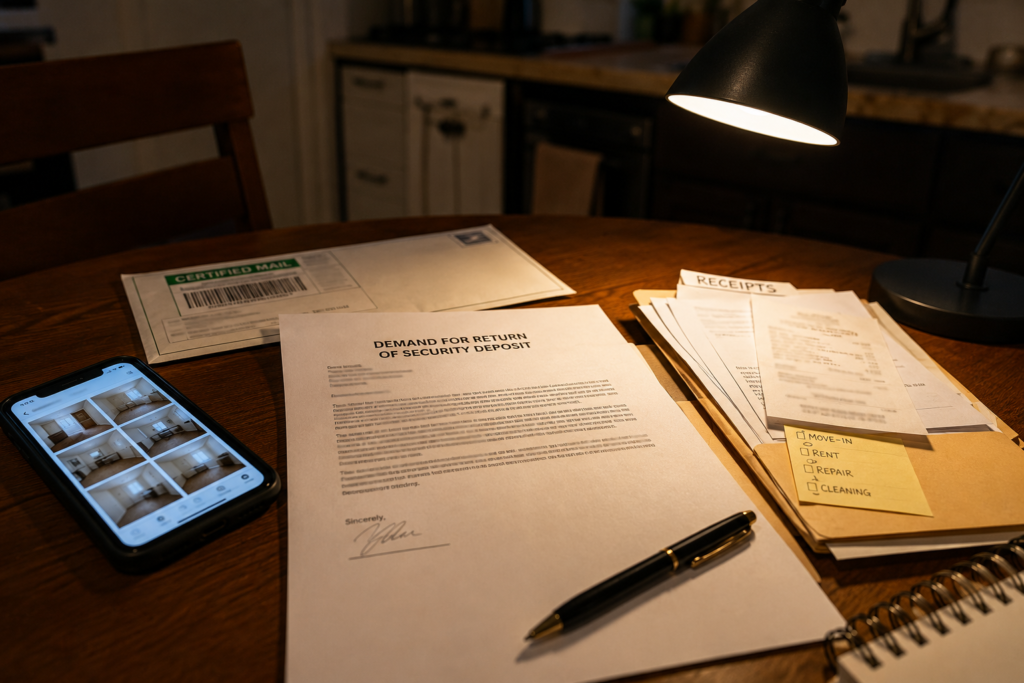
When the deadline passes with silence, or the itemized list arrives padded with fiction, escalate in order — each rung resolves most cases and strengthens the next. Rung one: the demand letter. Send a calm, dated letter (email plus certified mail) stating the facts: tenancy dates, deposit amount, the legal deadline that passed or the deductions you dispute and why, referencing your photos and your jurisdiction’s statute — including its penalty provision, by name or number. Give a firm deadline, typically 10–14 days, and state that you’ll file in small claims court after it. Attach nothing yet; the evidence is for court. A properly cited demand letter recovers wrongfully held deposits more often than any other single act, because landlords can do the math on a 2–3x penalty.
Rung two: outside pressure. Depending on where you live: your local tenant board or rent authority (some provinces and cities handle deposit disputes directly), the UK’s deposit protection scheme dispute service if your deposit was protected there, or a local tenant-rights organization — many offer free help, and the U.S. Department of Housing and Urban Development’s state tenant resources list agencies by location. Rung three: small claims court. It’s built for exactly this: filing costs are modest (often $30–$100, recoverable if you win), no lawyer is needed, and your evidence is already assembled — move-in photos, move-out photos, the lease, the demand letter, the silence. Tenants with dated before/after photos win these cases routinely, and where penalty statutes apply, they win more than the deposit. Landlords know this, which is why so many disputes end the week the court filing is served.
Nobody is born knowing what escrow means. The people who seem confident just got a calmer explanation than you did.
That's the whole idea behind our field guide — 73 pages that explain buying, selling, renting, and investing the way a patient friend would. This article is one piece of the picture. The book is the picture.
Common mistakes renters make with security deposits

1. Documenting move-out but not move-in
Move-out photos prove the condition you left — but without move-in photos, they can’t prove which conditions predated you. The landlord claims the cracked tile is new; your beautiful move-out photos agree it’s cracked. It’s the baseline that wins disputes. If you’re mid-tenancy without one, create a dated record today rather than never.
2. Over-repairing on the way out
Ambitious tenants repaint whole walls in mismatched white, patch drywall with visible bulges, or re-caulk tubs badly — converting non-deductible wear into deductible amateur damage. The rule: fix only what you can restore to original condition. Spackle a nail hole, yes; repaint a room with unmatched paint, no. When in doubt, leave wear as wear — it’s legally the landlord’s cost.
3. Accepting a padded deduction list without itemized proof
“$400 — cleaning; $350 — repairs” is not an itemization, and in most jurisdictions it doesn’t satisfy the landlord’s legal duty. You’re entitled to specifics and, in many places, receipts or estimates. Reply in writing requesting the itemized breakdown and documentation for each charge; vague lists frequently shrink dramatically the moment someone asks for receipts.
4. Missing the deadline math in both directions
Renters lose twice on deadlines: they don’t know their landlord’s return deadline (so wrongful holding goes unchallenged), and they forget their own — improper notice, late key return, or a forwarding address never provided. Look up your jurisdiction’s deposit deadline the week you give notice, calendar it, and make sure every obligation on your side is provably complete.
5. Skipping the joint walkthrough
Tenants dodge the move-out inspection to avoid awkwardness, then receive the deduction list by mail with no chance to respond. The walkthrough is where you fix a $30 problem before it becomes a $300 deduction, and where “everything looks fine” gets said in front of you. Request it in writing; in several jurisdictions the landlord must offer one, and their refusal itself helps you later.
FAQ: how to get security deposit back
How long does a landlord have to return a security deposit?
It depends on your state or province — commonly 14 to 30 days after move-out, with some places allowing up to 45–60, and the clock sometimes starting only when you provide a forwarding address. Miss the deadline and many jurisdictions expose the landlord to penalties of two to three times the deposit. Look up your local statute; it’s usually one search away.
Can a landlord charge me for repainting?
Only for damage beyond normal wear — unapproved colors, crayon, smoke saturation, large holes — and even then usually only the depreciated cost, since paint has an expected lifespan of a few years. Faded or lightly scuffed paint after a normal tenancy is wear and tear, and repainting between tenants is the landlord’s ordinary business expense.
Can my landlord keep the deposit for cleaning?
Only to return the unit to the cleanliness level you received it in, and only for actual cleaning performed — not a flat automatic fee, which is unenforceable in many places. A receipt from a professional move-out cleaning is the strongest preemptive defense: it’s hard to charge you $300 for cleaning a unit you can prove was professionally cleaned.
What if I broke something during my tenancy?
Honest damage is deductible — but at fair, depreciated cost, not replacement-with-upgrades. Your best move is usually to repair or replace it properly yourself before move-out and keep the receipt. Disclose it at the walkthrough rather than hoping it goes unnoticed; hidden damage discovered later reads as bad faith and invites padded charges.
Is it worth going to small claims court over a security deposit?
Usually yes, if you have documentation. Filing costs $30–$100 (typically recoverable if you win), no lawyer is required, and cases are decided on exactly the evidence you’ve built: photos, the lease, the demand letter. Where bad-faith penalty statutes apply, winning tenants can recover two to three times the deposit — the math strongly favors filing.
Do I get my deposit back if I break the lease early?
Breaking a lease and losing a deposit are separate questions. The landlord may deduct actual losses — unpaid rent until re-rental, re-letting costs where lawful — but must still follow the same itemization rules, and in many places must make reasonable efforts to re-rent quickly. Whatever exceeds their documented, legitimate losses still comes back to you.
Your deposit is your money — treat the process that way

Getting your security deposit back in full is rarely about luck and almost always about records: dated photos at both ends of the tenancy, written notice, a receipt-backed cleaning, and a forwarding address on paper. Build the file, know your local deadline, and escalate calmly if the money doesn’t arrive — the law is more on your side than most landlords hope you’ll discover. Start your move-in documentation folder today, browse the rest of our renting guides for what’s next, and if this deposit is destined to become a down payment someday, our guides to buying your first home in Canada and the true costs of owning a home are the natural next reads.

Free guide
Confused by real estate? Get the plain-English guide.
Buying, selling, investing & the legal basics — explained simply in 20 pages. Free, straight to your inbox.
No spam. Unsubscribe anytime.