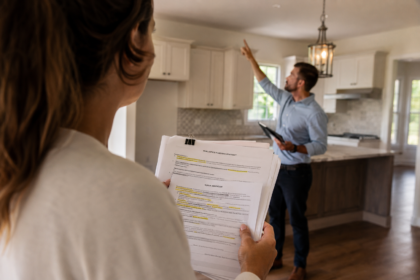
The lease agreement clauses to read before you sign are easy to skip and expensive to miss. Here’s what to look for before you sign anything.

Most people skim a lease for two numbers: the rent and the move-in date. Everything else gets a scroll and a signature. That works fine — until the clause nobody read turns out to be the one deciding what you owe, who’s on the hook, or whether you can leave early without bleeding money. Here are the 8 lease agreement clauses to read before you sign, explained in plain English.
Stop googling one term at a time. Understand the whole thing.
Articles answer one question. Real Estate, Made Readable answers the next fifty — 73 pages that walk you from total beginner to confident decision-maker, in plain English.
- Buying, selling, renting & investing — all in one place
- Every term explained the first time it appears
- Diagrams, worked examples & decision cheat-sheets
Instant PDF download
The lease agreement clauses to read before you sign are the ones that quietly control your money and your options: automatic renewal, joint and several liability, security deposit deductions, maintenance responsibility, landlord entry and notice, early termination penalties, subletting rights, and any clause asking you to waive a legal right. Rent and move-in date matter, but these eight decide what happens when something actually goes wrong.
Key Takeaways
- ✓Automatic renewal clauses can re-lock you into a full new term if you miss the notice window — usually 30 to 60 days before your lease ends.
- ✓If your lease has “joint and several liability,” you can be held responsible for 100% of the rent if your roommate stops paying — not just your share.
- ✓Landlords can only deduct security deposit money for damage beyond normal wear and tear — not for the natural aging of paint, carpet, or fixtures.
- ✓Most states require 24 to 48 hours of notice before a landlord can enter, though a few set no fixed minimum at all.
- ✓Breaking a lease early almost always costs you — a flat fee, a lost deposit, or rent until a new tenant is found — so know the number before you sign.
- ✓A clause asking you to waive your right to sue or to a livable home usually isn’t enforceable, no matter what the page says.
24–48 hrs
typical landlord entry notice
14–60 days
common deposit return window
1–2 months
typical early lease-break fee
Before you read clause-by-clause, do these three things
Get the full document, not a summary. Ask for the complete lease plus every addendum before you agree to anything.
Read it somewhere quiet, not standing in the leasing office with someone waiting on your answer.
Circle anything you don’t understand and ask about it directly — in writing, so the answer exists somewhere besides memory.
Still narrowing down a place? Start by spotting red flags in the listing itself — this guide picks up right where that one leaves off, once you’ve actually got a lease in hand. And if you’re still weighing whether renting makes sense for you at all right now, we’ve laid out the full rent-vs-buy math separately.
Lease Agreement Clauses to Read Before You Sign: Start With the Renewal Trap
An automatic renewal clause means your lease keeps going — often for a full new term — unless you or your landlord cancels it in writing by a specific deadline. Miss that window by a day, and you can be locked into another full year without ever meaning to.
Here’s what the language usually looks like: the lease automatically renews for successive terms unless either party gives 60 days’ written notice of intent to terminate. Some landlords write it looser, letting the lease slide into a month-to-month arrangement instead of a full renewal — which sounds friendlier, but it also means your landlord can usually change the rent with just 30 days’ notice once you’re on that footing.
A few states take this seriously enough to regulate it directly. California requires automatic renewal language to appear in bold type or it isn’t enforceable. Most states don’t go that far, so the clause can sit buried in paragraph nine of a document you signed once and never opened again.
Stop googling one term at a time. Understand the whole thing.
Articles answer one question. Real Estate, Made Readable answers the next fifty — 73 pages that walk you from total beginner to confident decision-maker, in plain English.
- Buying, selling, renting & investing — all in one place
- Every term explained the first time it appears
- Diagrams, worked examples & decision cheat-sheets
Instant PDF download
💡 Tip — Find the exact notice deadline and put it in your phone calendar the day you sign, not the week before it matters. Then confirm whether “renewal” means a brand new fixed term or a shift to month-to-month — those are two very different commitments.

Why “Joint and Several Liability” Means Your Roommate’s Mistake Becomes Your Bill
Joint and several liability means every name on the lease is responsible for the entire rent — not a fair split, the whole amount. If you and two roommates sign a lease with this clause and one of them stops paying, your landlord doesn’t have to chase the person who skipped out. They can come after you for the full balance and let you sort it out with your roommate later.
Most shared leases include this clause, and most landlords insist on it, because it gives them one easy target instead of three separate collection problems. It’s rarely negotiable. What is controllable is what happens between you and your roommates.
A separate roommate agreement — not the lease itself, a private document between tenants — won’t change what the landlord can legally do to you. But it does give you something to point to if a roommate stops paying: a paper trail showing what everyone agreed to owe, and grounds to pursue that person directly for their share.
Before you sign with people you haven’t lived with before, ask a blunt question: if this person’s paycheck disappeared for two months, could you cover their half? If the honest answer is no, joint and several liability is the clause that makes that scenario your problem, not just theirs.

The Wear-and-Tear Line That Decides If You Get Your Deposit Back
Normal wear and tear covers the damage that happens just from living somewhere — it isn’t something your landlord can deduct from your security deposit. Actual damage, the kind caused by neglect or an accident, is fair game.
The book they should hand you with the keys
Everything in real estate finally explained like a friend would — 73 pages, 3 levels, from your first viewing to your first investment property. Read it once, keep it forever.
Instant download
Faded paint from sunlight, worn carpet in a high-traffic hallway, small nail holes from hanging pictures, a loose door hinge — these fall under normal wear and tear. On the other side of the line: a cigarette burn in the carpet, a hole punched in drywall, a broken window, or stains that need more than a standard cleaning. FindLaw’s breakdown of allowable deductions draws the same line most states use: did this happen because you lived there, or because something went wrong?
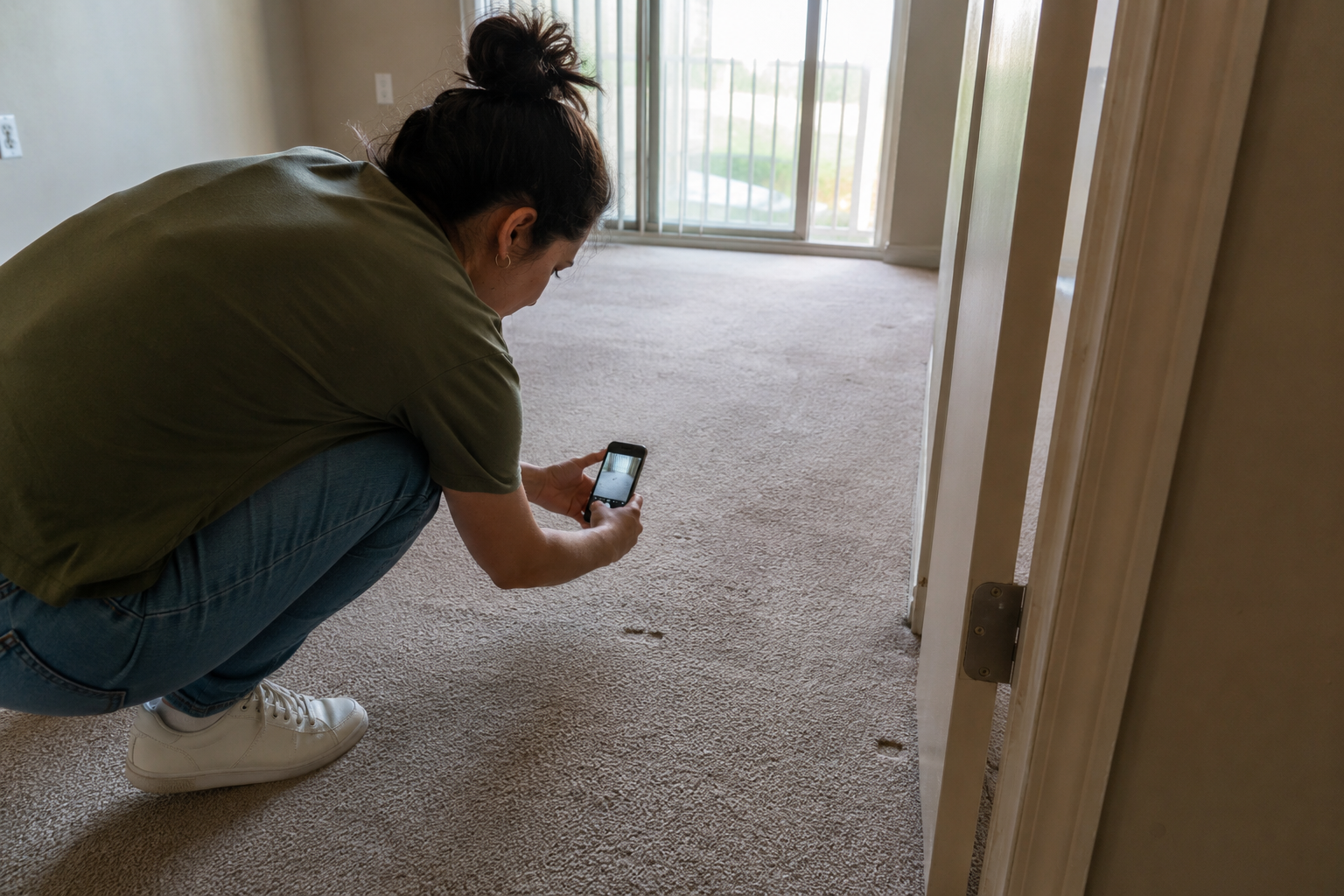
The problem is that this line usually gets argued after you’ve already moved out, when it’s your word against a move-out inspection you weren’t there for. The fix is boring but it works: photograph or video every room the day you move in, including things that are already imperfect, and send that documentation to your landlord in writing. Do the same thing again on your way out. A landlord who wants to withhold your deposit doesn’t need to prove damage happened — they just need you to be unable to disprove it. Photos flip that math back in your favor.
Most states also set a deadline for landlords to return what’s left of your deposit — commonly somewhere between 14 and 60 days after you move out, depending on the state, so it’s worth a two-minute search for your specific state’s rule.
Who Actually Fixes the Furnace? The Repair Clause Most Renters Skip
The maintenance clause spells out who’s responsible for what breaks, and it matters more than it looks like on page four. In nearly every state, landlords carry a baseline legal duty to keep a rental livable — working heat, working plumbing, no active safety hazards. That’s usually called the “implied warranty of habitability,” and a lease generally can’t sign it away, even if the language tries to.
Where leases actually differ is everything above that baseline. Who changes the air filter? Who’s on the hook for a garbage disposal that jams, or a dishwasher that stops draining? Some leases push routine appliance upkeep onto the tenant; others leave every repair, minor or major, to the landlord. Neither answer is wrong, but you want to know which one you signed before something breaks on a Sunday night. (Plenty of landlords now route these requests through property management software rather than a phone call — see how AI tools are changing rental management if you’re curious why your maintenance ticket disappears into a portal instead of getting a callback.)
❗ Important — A repair clause that makes the landlord “not responsible” for essential systems like heating or plumbing is worth flagging. It’s often unenforceable, since it conflicts with the habitability duty most states impose regardless of what the lease says.
Ask two questions before you sign: what’s the promised response time for an urgent repair — a broken heater in winter isn’t a “we’ll get to it next week” problem — and is there an after-hours emergency contact, or just a leasing office that closes at 5?

The Entry Clause: How Much Notice Your Landlord Really Owes You
An entry clause sets the rules for when your landlord can legally walk into your apartment, and “I own the building” isn’t one of the allowed reasons. Most states require advance notice before non-emergency entry, commonly 24 to 48 hours, though the exact number swings by state.
Real emergencies are the standard exception everywhere — a fire, a flood, a burst pipe, evidence someone’s in danger. No lease clause can require notice for those. Outside of an emergency, a landlord generally needs both a valid reason (repairs, an inspection, showing the unit to a future tenant) and advance notice, whether the lease spells that out or your state’s default law fills the gap.
The range is wider than most renters expect. Here’s a sample of how differently states handle it:
| State | Non-Emergency Notice Required |
|---|---|
| California | “Reasonable” — 24 hours presumed reasonable |
| Delaware | 48 hours |
| Wisconsin | 12 hours |
| Virginia | 72 hours (routine maintenance only) |
| Arkansas, Louisiana, Massachusetts | No statute — check lease language directly |
Source: Nolo’s state-by-state landlord access chart. If your lease is silent or vague on this, your state’s statute is still the backstop.
What trips people up is the vague version of this clause — language letting the landlord enter “at any reasonable time” with no notice period attached. That’s not automatically illegal, but it hands your landlord a lot of room to define “reasonable” on their own terms. If a landlord repeatedly enters without proper notice, that’s not just rude — depending on your state, it can be treated as a violation of your right to quiet enjoyment of your home, with real legal remedies attached.
Realistely Field Guide
Real Estate, Made Readable
The plain-language field guide to buying, selling, renting, and investing — including a full walkthrough of lease terms, deposits, and tenant rights, in the same no-jargon style as this guide.
See What’s Inside →Breaking a Lease Early: What the Termination Clause Actually Costs
An early termination clause tells you exactly what it costs to leave before your lease is up. If that clause doesn’t exist, “exactly” turns into “however much rent is left on the lease” — a much worse number.
Leases handle this a few different ways, and they’re worth comparing side by side:
Nobody is born knowing what escrow means. The people who seem confident just got a calmer explanation than you did.
That's the whole idea behind our field guide — 73 pages that explain buying, selling, renting, and investing the way a patient friend would. This article is one piece of the picture. The book is the picture.
| Structure | What it means for you |
|---|---|
| Flat lease-break fee | Often one to two months’ rent, due once you give notice you’re leaving early |
| Deposit forfeiture | You lose your full security deposit instead of paying a separate fee |
| Rent until re-rented | You owe rent until a new tenant moves in, sometimes with no cap |
A few states require landlords to make a reasonable effort to re-rent the unit rather than collect rent from an empty apartment indefinitely — but that duty depends on where you live, and it doesn’t override what your specific lease says without a fight.
There are carve-outs that override a standard termination clause in most states: active military orders (protected federally under the Servicemembers Civil Relief Act), documented domestic violence situations, and a unit the landlord fails to keep habitable. Those aren’t universal, but they’re common enough to be worth knowing before you assume you’re stuck.
Before you sign, find the actual number — not “there’s a fee,” the dollar amount or the formula. If the lease is silent on early termination entirely, ask directly. A landlord’s verbal answer during a walkthrough is not a substitute for lease language, and you’ll want to know now, not during a job relocation six months from now.

The Subletting Clause: What You Can (and Can’t) Do If Plans Change
A subletting clause decides whether you’re allowed to hand your unit off to someone else if your plans change mid-lease — a semester abroad, a job that moves you, a roommate situation that falls apart. Most leases either ban it outright, require written landlord approval first, or stay silent, which usually defaults to “not allowed” under state law, not “allowed.”
Subletting and assignment aren’t quite the same thing, and the difference matters. Subletting means you rent your unit to someone else temporarily while staying on the lease yourself — you’re still responsible if they trash the place or stop paying you. Assignment means transferring your entire lease to someone else, who becomes fully responsible in your place. Leases that allow one don’t automatically allow the other, so check which word actually appears in yours.
If subletting is allowed, expect conditions: landlord approval of the new occupant, often including a background and income check, written notice within a set number of days, and sometimes a fee. If it’s banned outright, moving someone in without permission — even a friend, even temporarily — can count as a lease violation, which puts your own tenancy at risk over someone else’s stay.
Before you assume you can sublet if life changes, read the actual clause, not just the general vibe of your landlord. “They seem chill about it” is not the same as “it’s in writing.”

The Clause That Tries to Make You Waive Your Own Rights
Some leases include language asking you to give up a right you’re not actually allowed to give up — waiving your right to sue, waiving your right to a habitable home, or agreeing not to report code violations. Most states treat core tenant protections as non-waivable, meaning the clause can sit right there in black and white and still not hold up if it’s ever tested.
This shows up in a few recognizable forms: a clause saying you can’t sue the landlord under any circumstances, one that makes you responsible for the landlord’s own negligence, or one that lets the landlord evict you — or refuse to renew — for filing a complaint or calling a building inspector. That last one is retaliation, and it’s illegal in the large majority of states regardless of what the lease says.
⚠️ Warning — An unenforceable clause isn’t the same as a harmless one. Just because a court probably wouldn’t uphold it doesn’t mean it won’t scare you out of exercising a right you actually have — which, for landlords who include this language, is often the entire point.
If you spot a clause like this, you don’t necessarily need to walk away from the apartment over it. You do want to know it’s there, understand that it likely isn’t enforceable in your state, and keep a written record if you ever need to push back on it later.

“An unenforceable clause isn’t the same as a harmless one — it works through intimidation, not enforceability.”
Lease Agreement Clauses to Read Before You Sign — and the Mistakes Renters Make Anyway
Knowing what the clauses mean is half the job. Here’s where even careful renters still trip up.
1. Signing the same day you view the unit, under pressure
Nobody reads eight pages of contract language in the ten minutes before another applicant shows up — and some landlords in competitive markets push same-day signing precisely because that works in their favor. Ask for 24 hours to review, even overnight. A landlord who won’t grant that for a multi-thousand-dollar commitment is telling you something about how they’ll handle requests later, too.
2. Assuming verbal promises count
A leasing agent saying “we’ll fix that before you move in” means nothing if it isn’t in writing. Verbal side deals don’t survive a change in property management, a new owner, or an actual dispute. Get anything you’re relying on added as a signed addendum before move-in.
3. Skipping the addendums and exhibits
The base lease is often the least interesting document in the packet. House rules, pet policies, and parking agreements get tucked into separate attachments that go entirely unread. Treat every attached page as part of the lease, because legally, it usually is.
4. Skipping the move-in inspection walkthrough
Without dated photos of the unit’s condition on day one, a security deposit dispute at move-out becomes your word against the landlord’s — and the landlord is the one holding the deposit. Photograph every room and every existing flaw, and send it in writing the same day.
5. Treating a “standard” template as non-negotiable
Renters assume a printed template can’t be changed, so they never ask. Plenty of individual landlords will strike or modify a clause if you ask politely and in writing, especially in a slower rental market. Circle anything you’re uneasy about and ask before you sign — not after.
📝 Not legal advice. This article explains common lease clauses in general terms. Landlord-tenant law varies by state and sometimes by city, and it changes. For a specific lease or dispute, consult a licensed attorney or your local tenant rights organization.
Frequently Asked Questions
Keep Reading Past This Lease
Real Estate, Made Readable
If renting is one stop on a longer plan — buying, investing, or just understanding the whole process — this is the full plain-language field guide, three levels, no jargon.
See What’s Inside →None of these eight clauses is a reason to walk away from an apartment you actually want — they’re reasons to read closely before you commit. The lease agreement clauses to read before you sign aren’t hidden; they’re just easy to skip past on the way to the signature line. Slow down for them once, and the fine print stops being a risk and starts being information you already have.
Buying instead of renting eventually? Purchase contracts work a little differently, and clauses matter just as much on that side of the transaction. For more on getting the renting side right, browse the rest of our renting guides.

Free guide
Confused by real estate? Get the plain-English guide.
Buying, selling, investing & the legal basics — explained simply in 20 pages. Free, straight to your inbox.
No spam. Unsubscribe anytime.