
Your offer was accepted, the contract is signed — and then your agent calls with a strange tone in their voice: the seller is having second thoughts. It’s one of the most stressful moments a buyer can face, and the internet answers it with vague reassurance. Here’s the precise answer to can a seller back out of an accepted offer: when they legally can, when they can’t, what happens to your money, and what to do the moment you smell cold feet.
Once both parties sign the purchase agreement, a seller generally cannot back out just because they changed their mind or received a better offer. Sellers can exit legally only through routes written into the contract: an attorney-review period, a seller contingency (like finding their next home), the buyer’s own breach or failed contingency, or a mutual release. A seller who walks away without legal grounds risks losing the deal in court and paying the buyer’s damages.
Key takeaways
- A signed purchase agreement binds the seller just as firmly as it binds you — “seller’s remorse” is not a legal exit.
- Legal seller exits exist only where the contract creates them: attorney review, seller contingencies, buyer default, or mutual agreement.
- A higher backup offer never justifies a seller walking away from your signed contract.
- If a seller breaches, your remedies include getting your earnest money back, suing for damages, or suing for “specific performance” — a court order forcing the sale.
- Recording a lis pendens (notice of pending lawsuit) can freeze the seller’s ability to sell to anyone else while the dispute plays out.
- Speed matters: respond to seller cold feet in writing, through your agent and an attorney, before your deadlines pass.
Can a seller back out of an accepted offer? What “accepted” really means

Everything turns on one distinction: an accepted offer versus a fully signed contract. Before signatures, an “acceptance” communicated verbally or by text binds nobody — real estate contracts must be in writing, so a seller can walk away from a verbal yes freely, and occasionally does when a better offer lands that evening. It stings, but it’s legal. The moment both parties sign the purchase agreement (and any required attorney-review or cooling-off window passes), the situation inverts completely: the seller is now contractually obligated to sell you that specific house on the written terms.
Nobody is born knowing what escrow means. The people who seem confident just got a calmer explanation than you did.
That's the whole idea behind our field guide — 73 pages that explain buying, selling, renting, and investing the way a patient friend would. This article is one piece of the picture. The book is the picture.
Buyers often assume the seller holds the power because sellers hold the property. Legally it’s closer to the opposite. Real estate is treated as unique under contract law — no two properties are identical — which is why courts can order a breaching seller to complete the sale rather than merely pay damages. A buyer who breaches typically loses their deposit; a seller who breaches can lose the entire deal plus legal costs. Understanding your specific contract’s language is the foundation for everything in this article, so if you haven’t read yours line by line, start with our guide on how to understand real estate purchase agreements.
The four ways a seller can legally back out
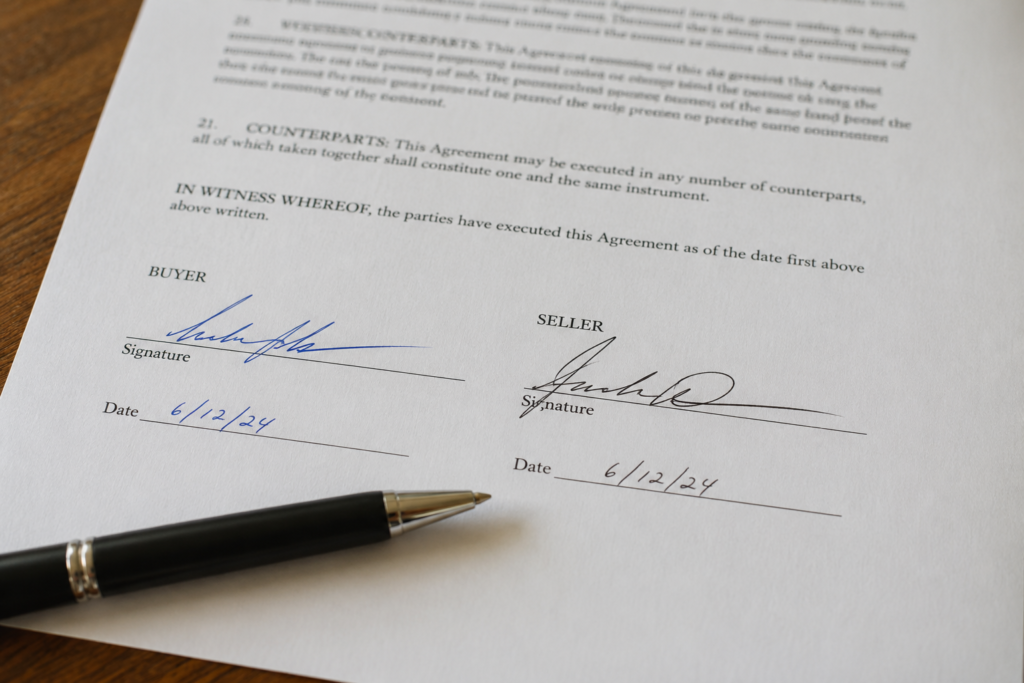
Every legitimate seller exit is a door the contract itself built. First: the attorney-review period. In several states, standard contracts include a short window — often around three to five business days after signing — during which either party’s attorney can disapprove the contract for nearly any reason. During attorney review, a seller can lawfully cancel, including because a better offer arrived. Once the window closes, that door locks.
Second: seller contingencies. Contracts sometimes give the seller their own escape hatches — most commonly a “home of choice” or “suitable housing” contingency letting the seller cancel if they can’t secure their next home by a stated date. Less common ones include contingencies tied to probate or court approval, or a lease-back the buyer refuses. If it’s written in and its conditions are met, the exit is legal. Third: the buyer’s own default. If you miss your earnest money deadline, blow past your financing date without an extension, or fail to perform any material obligation, the seller may gain the right to terminate — which is why the deadline discipline we covered in what happens after your offer is accepted is genuinely protective, not just organizational.
Fourth: mutual release. A seller can always ask you to let them out. Sometimes the story is sympathetic — a death, a divorce reversal, a job offer withdrawn — and sometimes it’s a negotiation: sellers have paid buyers real money (moving costs, rate-lock losses, even five-figure sums) to be released. You are never obligated to agree. If you do, get the release in writing with your earnest money returned and any compensation specified before you sign anything.
When a seller cannot back out — even if they really want to

The illegitimate reasons are the common ones. A higher offer arrives after signing: not a legal exit — the seller can hold it as a backup, nothing more, and if you beat other buyers to get here, our guide to multiple-offer situations explains how backups actually work. The seller decides the market is rising and they underpriced: not an exit. They “changed their minds,” got emotional about leaving, or a family member objected: not exits. The appraisal came in above the contract price and they feel cheated: still not an exit — the appraisal contingency, where one exists, protects the buyer, not the seller’s pride.

Stop googling one term at a time. Understand the whole thing.
Articles answer one question. Real Estate, Made Readable answers the next fifty — 73 pages that walk you from total beginner to confident decision-maker, in plain English.
- Buying, selling, renting & investing — all in one place
- Every term explained the first time it appears
- Diagrams, worked examples & decision cheat-sheets
Instant PDF download
Sellers attempting these exits usually don’t announce a breach; they manufacture one. The classic maneuvers: refusing access for the appraisal or inspections, missing their own deadlines, refusing to sign routine escrow paperwork, or suddenly “discovering” a defect they hope scares you off. Each of these is a stall dressed as an obstacle. Document every instance in writing through the agents, because a paper trail of seller obstruction is exactly what a judge — or a settlement negotiation — turns on. And a seller who suddenly discloses a serious defect must still comply with disclosure law; our guide on how to interpret property disclosure statements explains what sellers are legally required to reveal and when.
What happens if the seller breaches: your money and your remedies

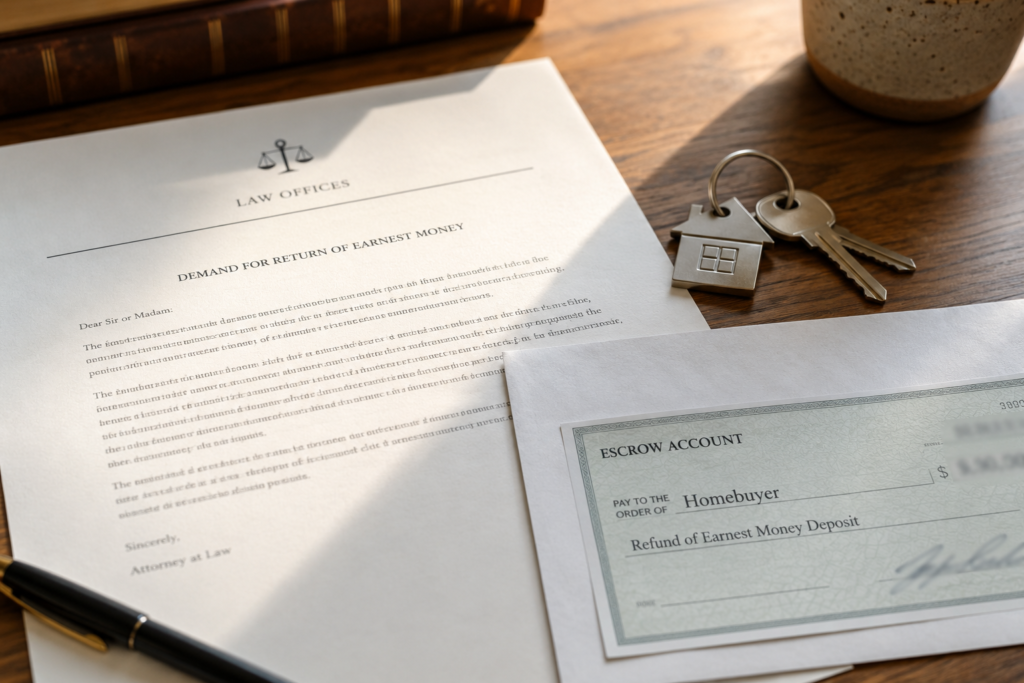
Start with the easy part: your earnest money. If the seller wrongfully terminates, your deposit comes back — the escrow holder releases it once both parties sign a release or a court orders it. A seller cannot keep your deposit while also refusing to sell; the deposit exists to secure your performance, not to fund their exit. If a seller stalls the release, most escrow agreements let the holder retain the funds until the dispute resolves, which becomes one more pressure point on the breaching side.
Beyond the refund, you have three escalating remedies. One: walk away and recover damages. Out-of-pocket costs — inspection, appraisal, rate-lock fees, temporary housing — are commonly recoverable, and in some states buyers can pursue “benefit of the bargain” damages if the home’s value exceeded the contract price. Two: sue for specific performance. Because every property is legally unique, courts can order the seller to complete the sale on the contract terms. It’s the strongest remedy and the slowest — months at minimum — but the credible threat of it settles many disputes. Three: record a lis pendens. This public notice of a pending lawsuit attaches to the title and effectively freezes the seller’s ability to sell to anyone else, since no sane buyer or title company touches a property under claim. For a seller trying to breach in order to sell higher, a lis pendens removes the entire motive.
All three remedies require a real estate attorney, and the calculus is practical: legal fees versus the deal’s value to you. For a modest dispute, a firm attorney letter resolves most cases within days. For a home you genuinely want in a rising market, specific performance plus lis pendens is the combination that wins. Move quickly either way — remedies erode when the wronged party sits on them, and continuing to perform your own obligations (deposits, applications, deadlines) keeps your hands clean for the fight.
Buyer vs. seller: who can back out of what
Buyers and sellers are not symmetrical under a standard purchase contract. Here’s the side-by-side reality:
Stop googling one term at a time. Understand the whole thing.
Articles answer one question. Real Estate, Made Readable answers the next fifty — 73 pages that walk you from total beginner to confident decision-maker, in plain English.
- Buying, selling, renting & investing — all in one place
- Every term explained the first time it appears
- Diagrams, worked examples & decision cheat-sheets
Instant PDF download
Warning signs a seller is getting cold feet — and your playbook
Seller breaches rarely arrive as announcements; they arrive as friction. The early tells: scheduling for the appraisal becomes mysteriously impossible, the seller stops responding through their agent, agreed repairs show no progress, escrow paperwork sits unsigned for a week, or the listing quietly reappears as “coming soon” somewhere. Any one of these can be innocent. Two or more is a pattern, and patterns get handled early or expensively.
The playbook has four steps, in order. First, convert everything to writing: have your agent send dated, factual emails confirming each missed appointment or deadline (“Confirming the seller declined appraisal access on July 8 and 10”). Second, send a formal notice: many contracts include a “notice to perform” or similar mechanism that starts a clock on the other side’s compliance. Third, bring in a real estate attorney at the first genuine refusal — a letter on law-firm paper resolves most cold feet for a few hundred dollars, and general guidance from the Consumer Financial Protection Bureau’s home-buying resources can help you understand the process you’re protecting. Fourth, decide your endgame before you threaten it: deposit-back-and-walk, damages, or specific performance. A good buyer’s agent will have seen this movie before and knows the local escalation rhythm — if yours hasn’t, that’s a gap worth noting for the future via our guide on how to find a realtor you can trust.
Common mistakes buyers make when a seller tries to back out

1. Accepting “the deal is off” as if saying it makes it true
A seller declaring cancellation has exactly as much legal force as a buyer declaring the price is now lower — none, unless a contractual right backs it. Buyers who accept the announcement and start house-hunting again have effectively consented to a mutual release for free. Respond in writing that you intend to perform and expect the same, then get advice before signing any cancellation form.
2. Signing the release before negotiating it
Escrow will send you a bland mutual-release form the moment cancellation is mentioned, because closing files cleanly is their job. Your signature on it is worth money: your out-of-pocket costs, your rate-lock loss, sometimes much more if the seller is re-selling higher. Never sign a release without, at minimum, full deposit return plus documented costs — and know what you’re giving up before you give it.
3. Missing their own deadlines during the standoff
The moment buyers sense trouble, some pause their loan or skip the appraisal “until this gets sorted out.” That pause converts the seller’s imaginary exit into a real one — your default. Keep performing flawlessly: deposits on time, documents submitted, extensions requested in writing where genuinely needed. The party with clean hands wins these disputes.
4. Threatening specific performance with no intention of suing
An empty legal threat, once called, destroys your leverage permanently. Before invoking lawsuits, price the fight with an actual attorney — many offer flat-fee consultations — and decide honestly whether you’d follow through. A credible, specific, attorney-delivered position beats a dramatic email every time, and often ends the dispute within a week.
5. Confusing a hard negotiation with a breach
A seller refusing your repair requests, declining to extend your financing deadline, or driving a hard bargain on a walkthrough problem is negotiating, not breaching — those are their contractual rights. Escalating legal language over lawful hardball poisons a deal that was still closable. Save the artillery for genuine refusals to perform: blocked access, unsigned required documents, an actual refusal to close.
FAQ: can a seller back out of an accepted offer
Can a seller back out of an accepted offer before signing the contract?
Yes. A verbal or emailed “we accept” isn’t binding — real estate contracts must be written and signed. Until both parties have signed the purchase agreement (and any attorney-review window has closed), either side can walk away without penalty. This is why speed matters between offer acceptance and signatures.
Can a seller back out if they get a higher offer?
Not after a fully signed contract. A higher offer can only become a backup that activates if your deal fails on its own terms. A seller who breaches to chase a better price is the classic specific-performance case — courts and attorneys see straight through it, and a lis pendens can freeze the second sale entirely.
What does it cost a seller to back out of an accepted offer?
A breaching seller can owe the buyer’s out-of-pocket costs (inspection, appraisal, rate-lock and housing losses), potentially the difference between the contract price and the home’s value, attorney fees where the contract awards them, and in the strongest cases the house itself via specific performance. “Backing out” is routinely a five-figure decision.
Do I get my earnest money back if the seller cancels?
Yes. If the seller wrongfully terminates or lawfully exits through their own contingency, your deposit returns in full — it secures your performance, not their exit. Escrow typically requires both signatures on a release, so a stalling seller can delay the refund, which becomes one more claim in your demand letter.
Can a seller back out during the inspection period?
Generally no — the inspection contingency belongs to the buyer in standard contracts. The seller may refuse your repair requests, which then lets you choose to proceed or exit, but the refusal itself doesn’t cancel anything. A few state forms give sellers a termination right if negotiations fail, so check your specific contract’s inspection language.
What is specific performance in real estate?
Specific performance is a court order compelling a breaching party to complete the contract — for real estate, forcing the seller to actually sell you the home at the agreed price. Courts grant it because land is legally unique and money can’t fully substitute. It takes months and an attorney, but its credible threat settles most seller-breach disputes early.
The book they should hand you with the keys
Everything in real estate finally explained like a friend would — 73 pages, 3 levels, from your first viewing to your first investment property. Read it once, keep it forever.
Instant download
Hold your ground — the contract is on your side
The answer to whether a seller can back out of an accepted offer is: almost never after signatures, and always at a price — the law treats your contract as a promise to sell a unique thing, and it gives you real tools when that promise breaks. If a seller wobbles, perform perfectly, document everything, and escalate through an attorney early rather than late. For the full map of the period where these disputes happen, revisit what happens after your offer is accepted, keep our home-buying guides close, and make sure you’re not committing any of the top 10 first-time homebuyer mistakes while you fight for the house you already won.

Free guide
Confused by real estate? Get the plain-English guide.
Buying, selling, investing & the legal basics — explained simply in 20 pages. Free, straight to your inbox.
No spam. Unsubscribe anytime.